


Planning Diwali gifts for your clients, partners, or employees?
We’ll help you choose Diwali gifts that fit your budget and brand—quick, simple, and hassle-free. Just reach out to our team and we’ll take care of the rest.
 4.8 out of 5 ★★★★★ by 1100+ brands
 Businesses spend money across many areas, like employees, marketing, and technology. In recent years, spending has shifted fast due to AI, automation, and digital growth. Companies now focus more on efficiency, productivity, and long-term returns.
In this article, you will see the 30+ business spending statistics that are updated and relevant for 2026. These numbers show where companies invest and how spending is changing in 2026.
All statistics shared in this article come from trusted industry reports and verified sources. You can find all source links listed at the end of the article for reference.
Key Business Spending Statistics at a Glance
- Global ICT spending will reach $7 trillion, led by growth in IT, telecom, and digital services.
- Businesses will spend $4–5 trillion on IT, with a strong focus on cloud and infrastructure.
- Software spending will hit $1.43 trillion, driven by SaaS and automation demand.
- AI spending is growing 40–50% yearly, as companies shift toward automation.
- Companies spend 11.2% of revenue on marketing to drive growth and visibility.
- SEO delivers 300% to 400% ROI, making it a top long-term channel.
- 60% to 80% of spending goes into daily operations and business activities.
- Low employee engagement caused a $438 billion loss, showing why businesses invest in engagement and experience.
Global Business Spending Overview
Businesses are increasing their overall spending as they focus more on technology, software, and digital systems. Much of this growth comes from AI adoption and the need to stay competitive in a fast-changing market. Companies now invest heavily in tools and infrastructure that support long term growth and efficiency.
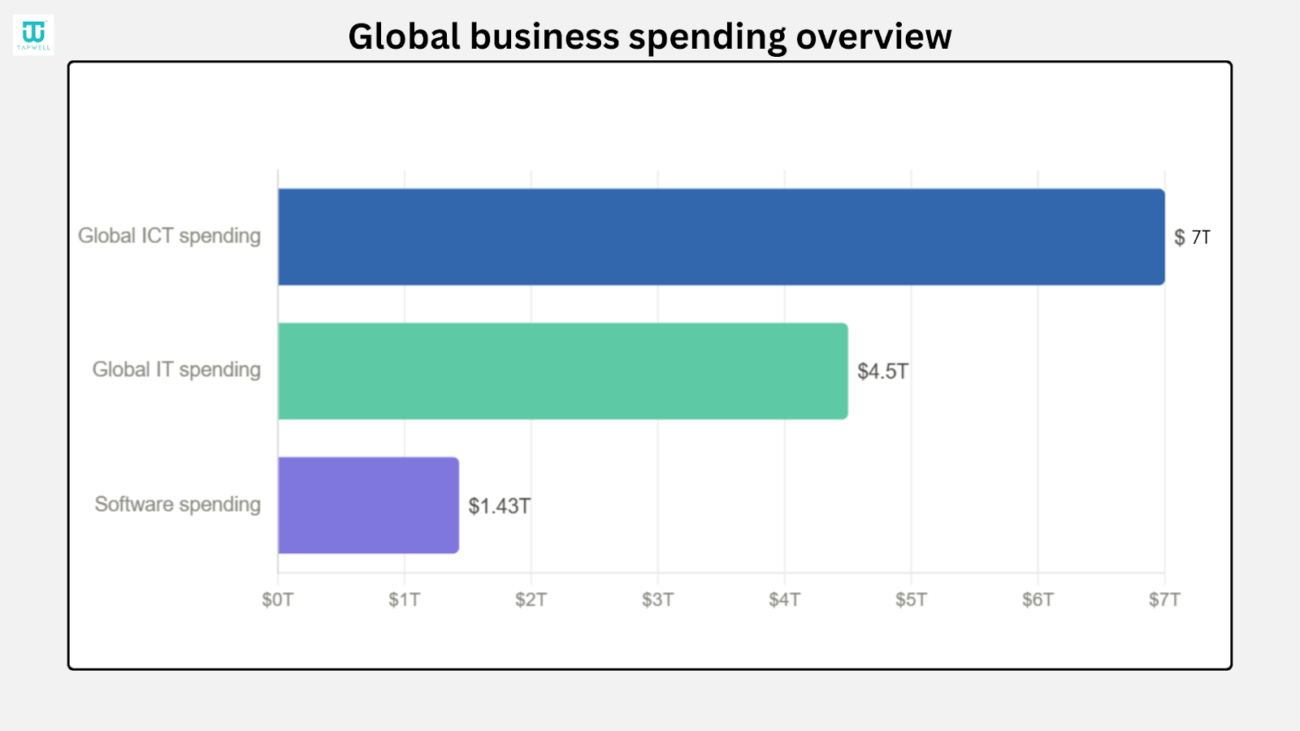
- Global ICT spending will reach nearly $7 trillion, which includes telecom, IT, and business services.
- Businesses will spend over $4–5 trillion on IT, with software alone reaching $1.43 trillion and growing at 14% each year.
- Global software spending will reach $1.43 trillion by 2026, showing strong demand for software solutions.
AI and Emerging Technology Spending
Companies are spending more on AI and modern technology to improve speed and reduce manual work. Many businesses now shift budgets from labor to automation tools. This shift helps them increase output while keeping costs under control.
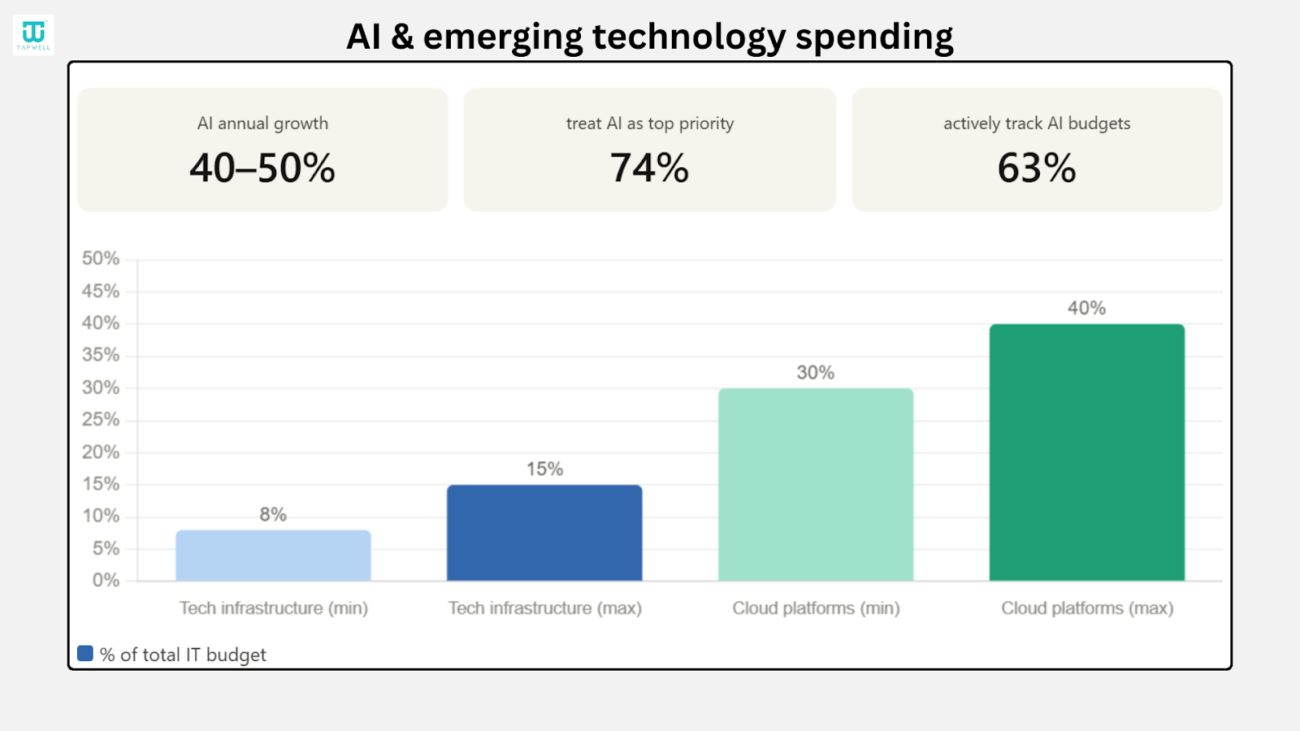
- AI spending is growing 40–50% each year, with 74% of companies treating it as a top priority and big tech pushing investments beyond $300 billion.
- Companies are becoming more controlled in spending, as 63% actively track and manage their AI budgets.
- Technology infrastructure takes a notable share, with businesses spending 8% to 15% of their total budget on it.
- Cloud systems take a large share, as 30% to 40% of IT budgets now go into cloud-based tools and platforms.
Marketing Budget Allocation
Businesses spend a large part of their budget on marketing to attract and retain customers. Digital channels now take the biggest share as companies focus on online growth. Most businesses also increase their marketing spend to stay competitive.
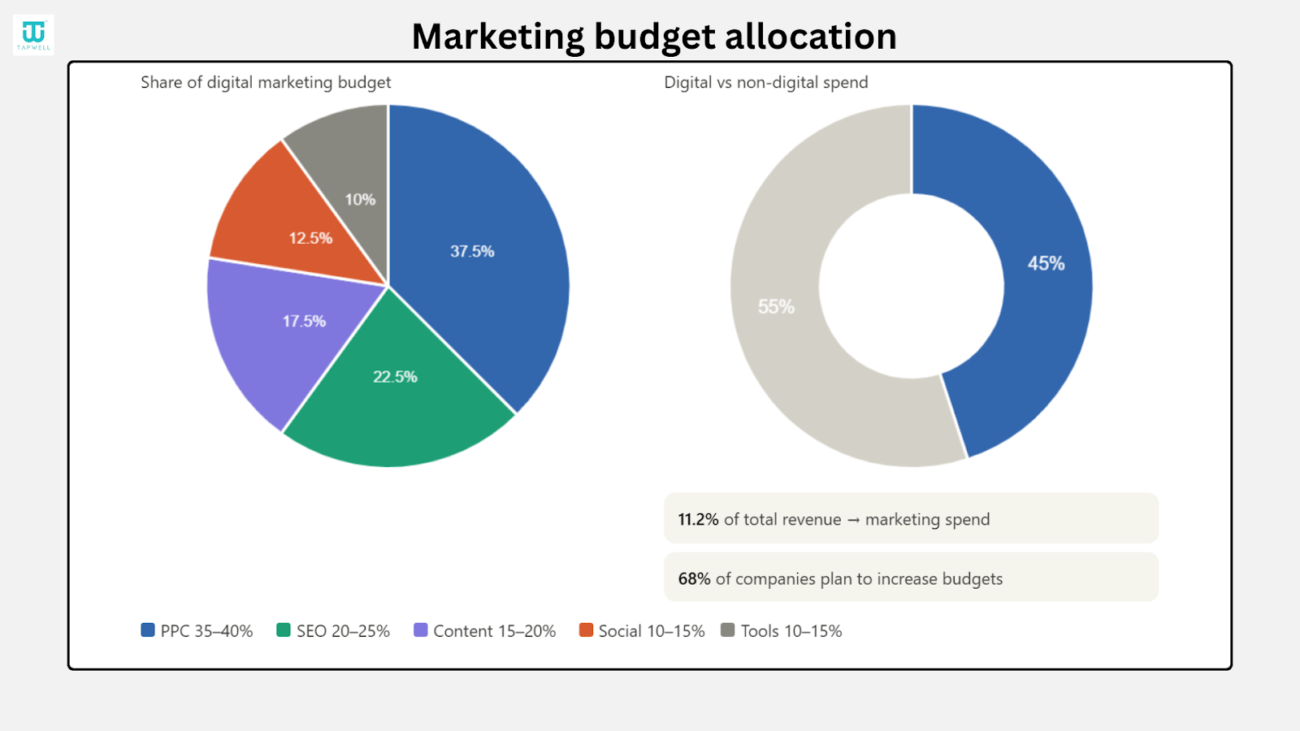
- 11.2% of total revenue goes into marketing, which shows how strongly businesses focus on growth and customer acquisition.
- 68% of companies plan to increase their marketing budgets, as rising competition pushes them to invest more in visibility and reach.
- Marketing efforts are also expanding in time and effort, with 74% of teams expecting to spend more time on campaigns and activities.
- Digital marketing now takes a major share, as 45% of total marketing budgets go into online channels like search, social, and ads.
- SEO remains a key long term strategy, with businesses allocating 20% to 25% of their digital budgets to improve organic traffic.
- Paid advertising takes the largest portion, as 35% to 40% of budgets go into PPC to drive quick results and conversions.
- Content marketing continues to grow, with 15% to 20% of budgets spent on blogs, videos, and other content formats.
- Social media marketing holds a steady share, with businesses spending 10% to 15% to build engagement and brand presence.
- 10% to 15% of marketing budgets go into tools and technology, which helps teams automate and scale their efforts.
Marketing Performance and ROI
Businesses do not just spend on marketing. They also track returns closely to see what works best. Channels like SEO and paid ads continue to deliver strong results, which is why companies keep increasing their investment in them.
- SEO delivers 300% to 400% return on investment, which makes it one of the most effective long term marketing channels.
- Paid advertising generates 4 to 8 times return on spend, helping businesses drive faster conversions and sales.
- Some companies spend up to $950,000 per month on PPC ads to scale customer acquisition quickly.
Operations and Cost Optimization
Daily operations take a large share of business spending. Companies focus on managing costs better by using automation and improving processes. Many businesses now try to reduce waste and improve efficiency to protect margins.
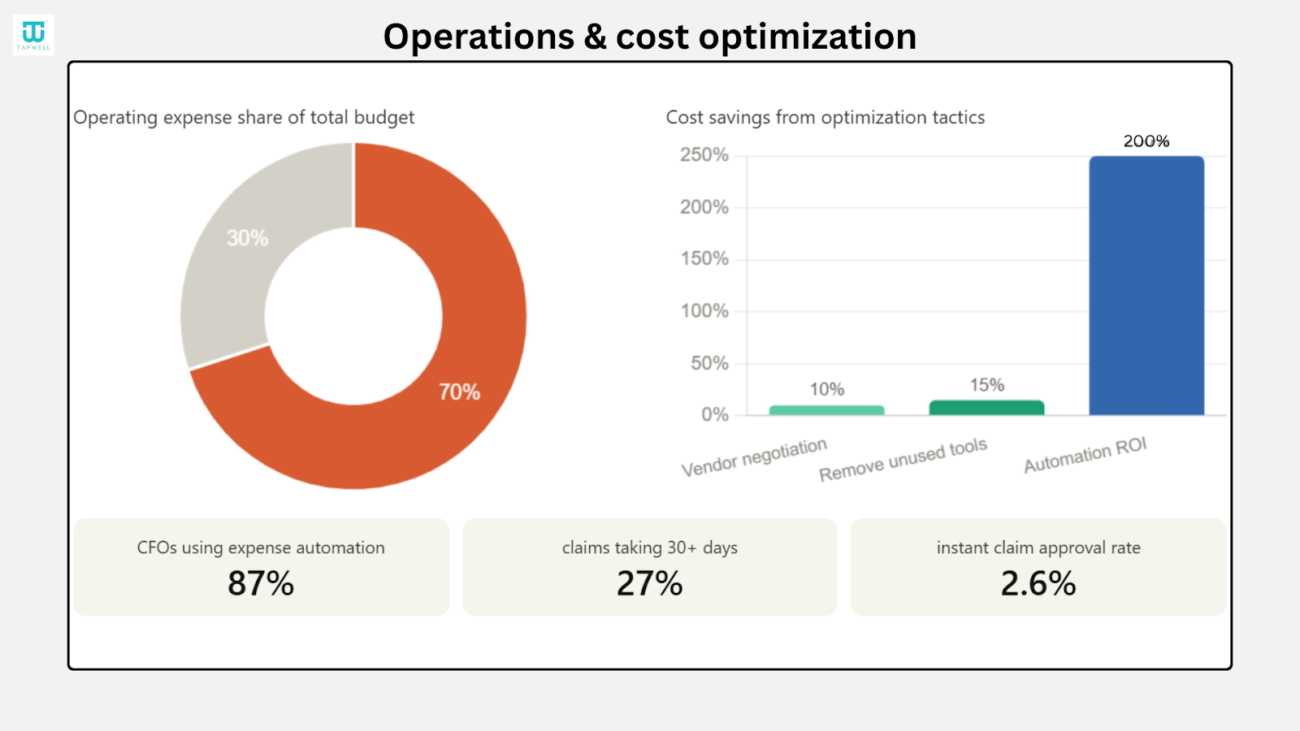
- 60% to 80% of total business spending goes into operating expenses like rent, utilities, and daily activities.
- Businesses in the UK spend more than £2.8 trillion every year on operational costs.
- 87% of CFOs invest in expense automation to improve accuracy and control over spending.
- Expense processes are still slow, and only 2.6% of claims get approved instantly in most companies.
- Many approvals take time, with 27% of expense claims taking more than 30 days to process.
- Automation improves efficiency, and businesses see 200% to 300% return on investment from it.
- Companies reduce costs through better deals, as vendor negotiations help save 5% to 15% of expenses.
- Removing unused tools helps cut waste, and businesses reduce 10% to 20% of costs this way.
Travel and Expense Spending
Travel remains a key part of business operations, especially for sales, client meetings, and events. Even with remote work, companies still spend heavily on travel and related expenses to maintain relationships and growth.
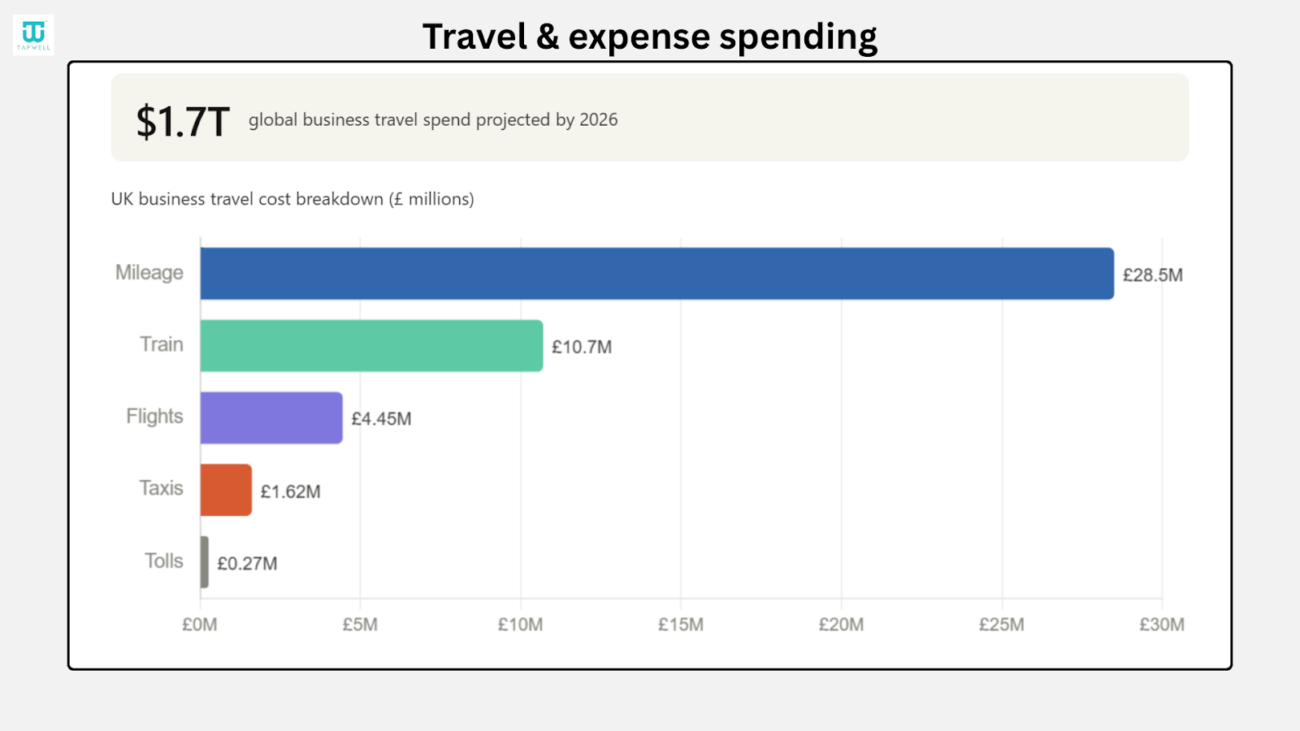
- $1.7 trillion will be spent globally on business travel by 2026, showing strong demand for in person meetings.
- Companies spent £28.5 million on mileage, which highlights the cost of employee travel by road.
- Air travel remains important, and spending reached £4.45 million for flights.
- Train travel is also widely used, with businesses spending £10.7 million on it.
- Taxi usage adds to costs, and companies spent £1.62 million on local transport.
- Toll charges contribute to expenses, with total spending reaching £270,000.
Industry-Specific Spending Patterns
Spending patterns change based on the type of business. Each industry focuses on different cost areas depending on its operations. This helps companies manage resources based on their needs and priorities.
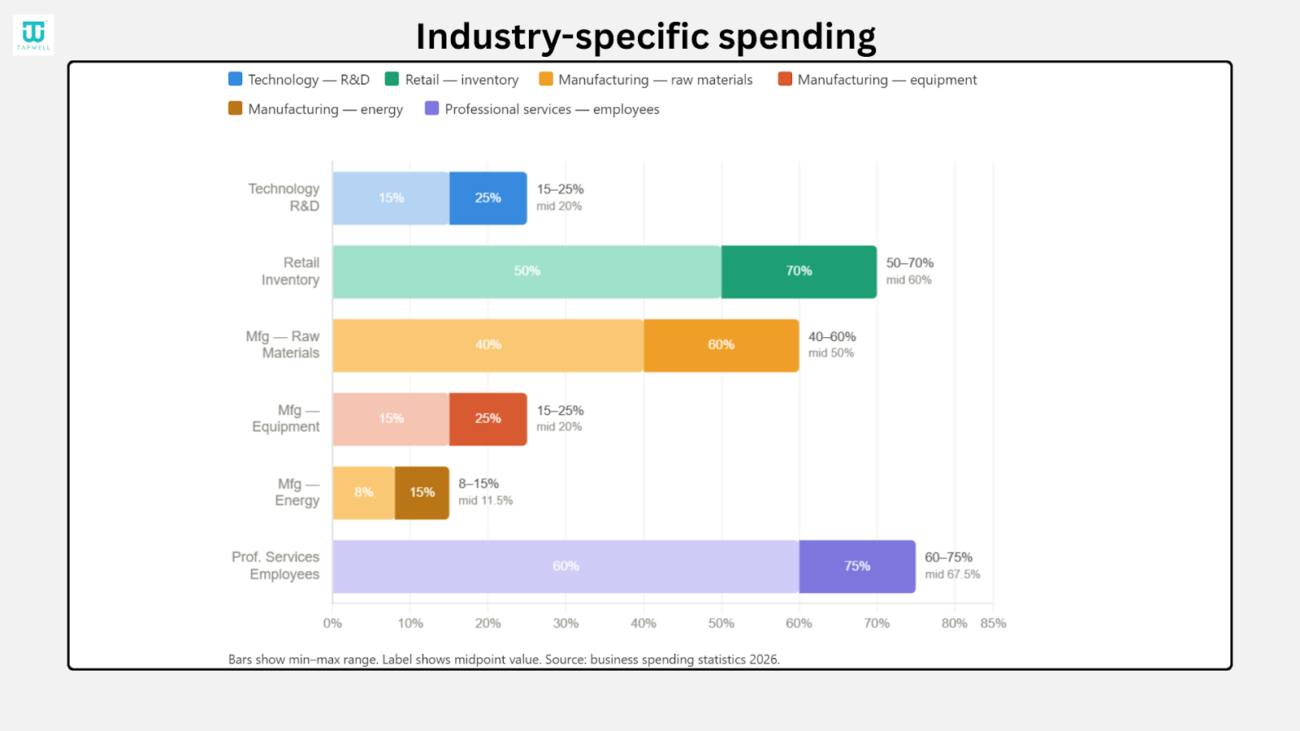
- 15% to 25% of revenue goes into research and development in technology companies, as they focus on innovation and product growth.
- Retail businesses spend 50% to 70% of their budget on inventory to maintain stock and meet customer demand.
- Manufacturing companies spend 40% to 60% on raw materials, which forms the base of their production costs.
- Equipment is another major cost, and manufacturing businesses spend 15% to 25% on machinery and tools.
- Energy and utilities take 8% to 15% of manufacturing budgets due to heavy operational needs.
- Professional service firms spend 60% to 75% of their budget on employees, as their work depends on skilled talent.
Investment and Financial Trends
Businesses are increasing their spending on growth and long term strategy. Companies now focus more on expansion, partnerships, and sustainability. These trends show how businesses plan for future growth instead of short term gains.
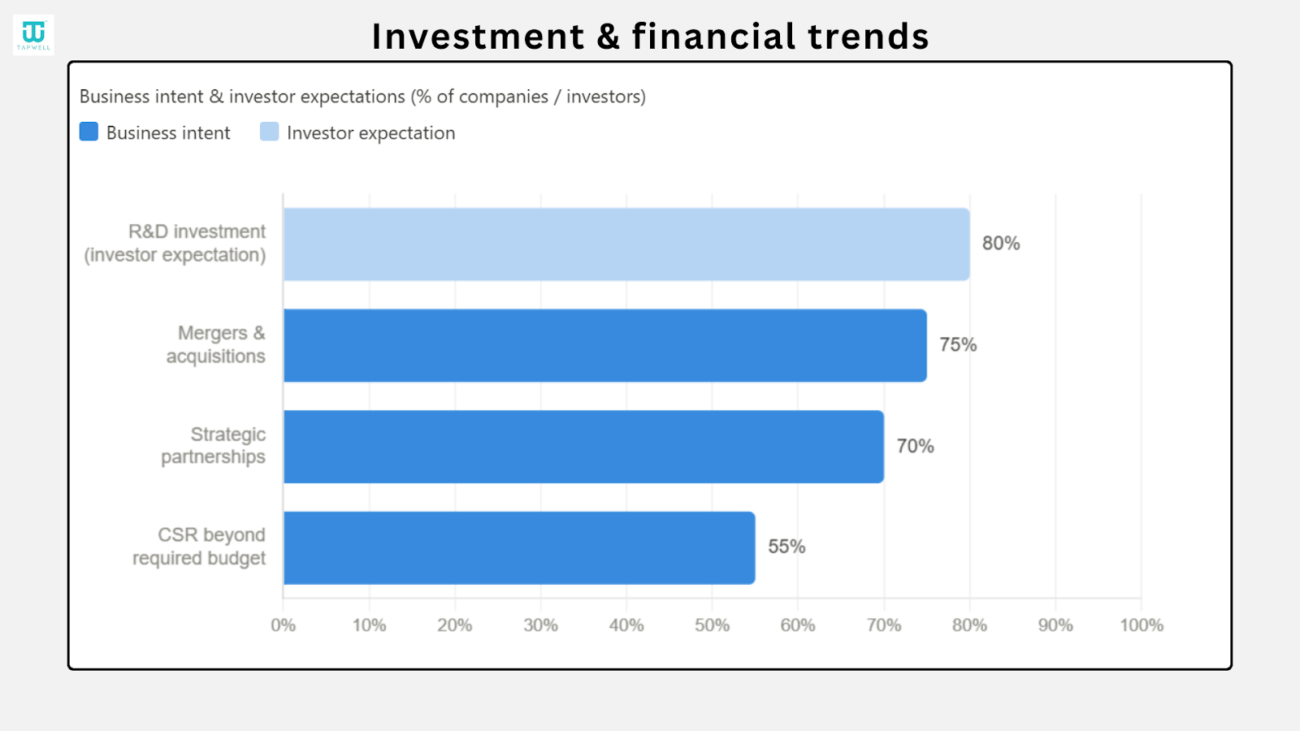
- 80% of investors expect higher spending on research and development as companies focus on innovation.
- 75% of businesses plan to increase mergers and acquisitions to expand their market presence.
- Strategic partnerships are rising, and 70% of companies expect to invest more in collaborations.
- Companies are spending more on social impact, and 55% now invest beyond required CSR budgets.
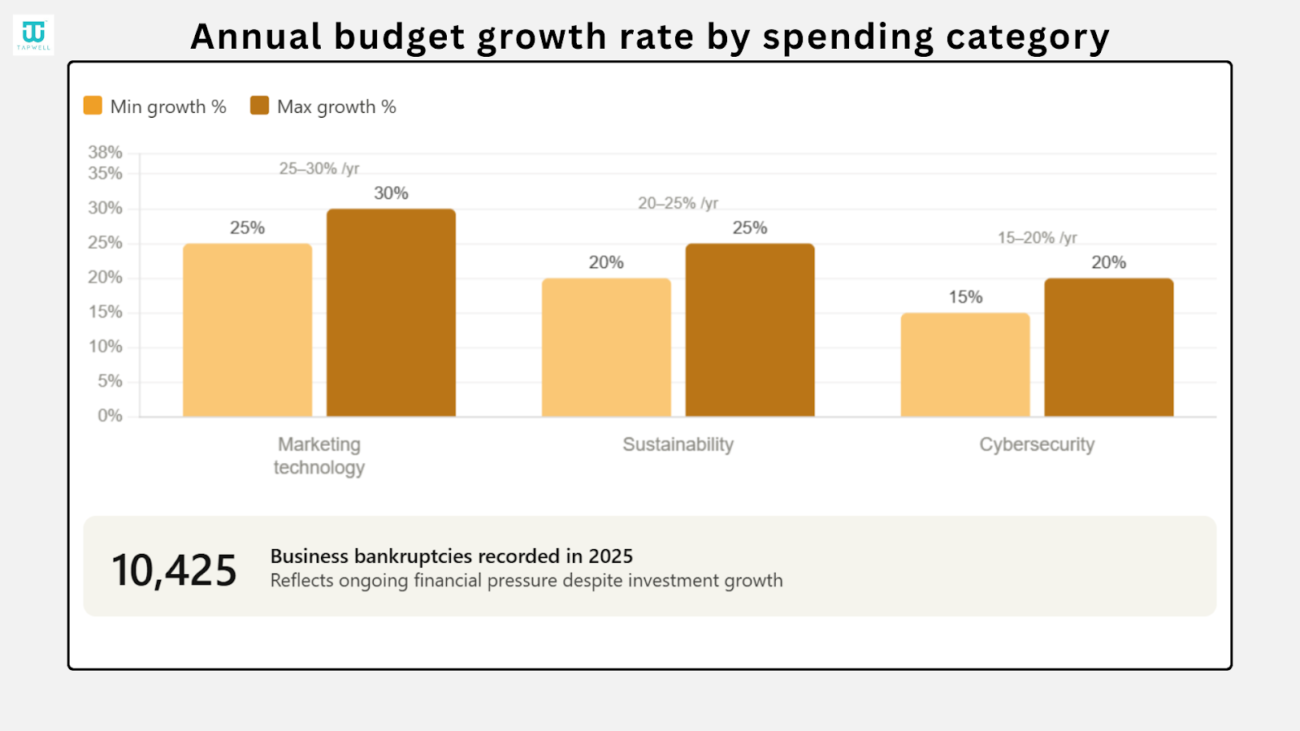
- Sustainability is becoming a priority, with spending growing at 20% to 25% every year.
- Cybersecurity budgets continue to rise, increasing by 15% to 20% annually across companies.
- Marketing technology investment is growing fast, with budgets increasing by 25% to 30% each year.
- 10,425 bankruptcies were recorded in 2025, showing the financial pressure many businesses still face.
Employee and HR Spending
Employee costs remain the biggest part of business spending. Companies invest heavily in salaries, benefits, and training to improve productivity and retain talent. Many businesses now focus on upskilling and employee experience to stay competitive.
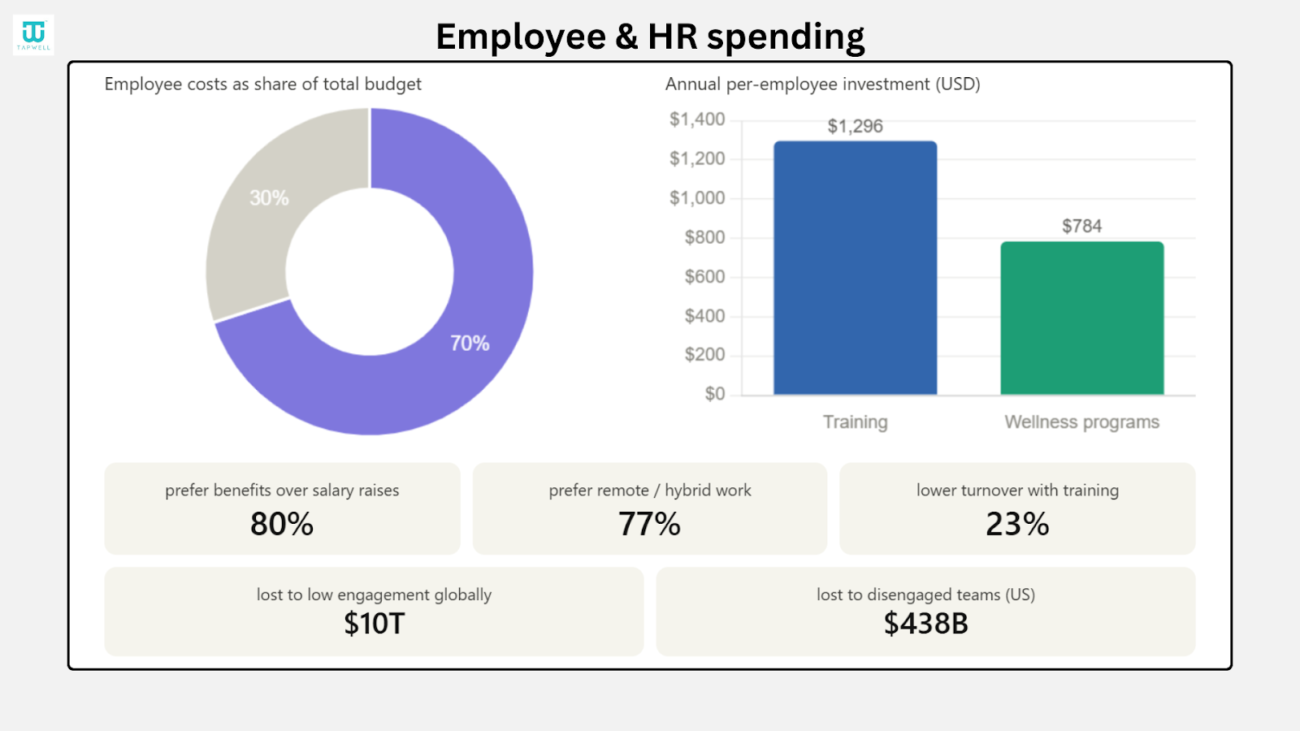
- 70% of total business budgets can go into employee costs, making it the largest spending category.
- From our study on corporate gifting spend in India, 25% of companies spend ₹500–₹2,000 per employee, while 23% spend below ₹500, showing that gifting budgets vary widely across businesses.
- 80% of employees prefer benefits over salary increases, which pushes companies to invest more in perks.
- Employee benefits add extra cost, increasing salaries by 15% to 25% for most companies.
- Labour costs form a major share, as they account for 40% to 70% of total business expenses.
- Businesses invest in skills, and they spend $1,296 per employee each year on training programs.
- Wellness programs are now common, with companies spending $784 per employee to improve health and satisfaction.
- Flexible work is now a priority, and 77% of employees prefer remote or hybrid work options.
- 23% lower employee turnover is seen in companies that invest in training, which shows how learning programs improve retention.
- $438 billion was lost due to low employee engagement, showing how costly disengaged teams can be.
- Global productivity loss reached $10 trillion as employee engagement dropped to low levels across industries.
Turn Business Spending into Real Employee Engagement With TapWell
Businesses spend up to 70% of their budget on employees, yet low engagement still leads to billions in losses. This shows a clear gap. Salary alone is not enough to keep employees motivated and loyal.
Companies now focus more on employee experience, rewards, and recognition. This is where structured corporate gifting becomes important. It helps businesses build stronger relationships without increasing overall costs.
TapWell helps companies manage gifting in a simple and scalable way. Instead of handling gifts manually, businesses can use a structured system that fits their budget and goals.
TapWell offers access to 4,000+ products across categories like tech, apparel, hampers, and wellness. Whether your budget is low or high, you can find the right gift without overspending.
You can also:
- Add company branding and personalized names on gifts
- Create custom gift hampers for events or campaigns
- Build your own gift store where employees choose what they want
- Send gifts directly to employees or clients across India and globally
With low minimum order quantities, free samples, and fast delivery in 5 to 7 days, TapWell makes gifting easy to manage at any scale.
Instead of treating gifting as a one time expense, businesses can use it as a planned strategy to improve engagement, retention, and brand value.
Data Sources
- https://profiletree.com/business-spending-statistics/
- https://tracking.us.nylas.com/l/323c88365d2844e988eada6783cbb9a8/0/813403f16a47d27cf2842ba6838c915eb7c68d853e25b636f655ecb49f06f350
- https://www.itpro.com/technology/artificial-intelligence/hyperscaler-ai-spending-is-getting-out-of-control-and-microsoft-says-it-could-take-15-years-for-it-to-make-good-on-investments
- https://captureexpense.com/resources/expense-trends-2025-report
- https://cake.com/blog/workplace-statistics
- https://www.gallup.com/workplace/349484/state-of-the-global-workplace.aspx
- https://www.itpro.com/security/global-cybersecurity-spending-is-going-to-hit-usd213-billion-in-2025-heres-whats-driving-investment
- https://arxiv.org/abs/2602.00139
- https://www.reuters.com/legal/litigation/japan-bankruptcy-cases-seen-rising-iran-conflict-lifts-costs-think-tank-says-2026-04-08/
- https://csrboximpact.in/storage/publications/Official%20ICOR%20Report%202025_Publication_Website.pdf
- https://www.oecd.org/en/publications/global-corporate-sustainability-report-2025_bc25ce1e-en.html
- https://www.pwc.com/gx/en/issues/c-suite-insights/global-investor-survey.html
- https://www.ft.com/content/f52c659b-296d-4c5f-b92c-392f552574e2
- https://www.techradar.com/pro/spending-more-on-ai-is-not-the-same-as-creating-value-new-study-claims-firms-are-ready-to-spend-big-on-ai-but-are-afraid-to-take-the-first-step
- https://hginsights.com/blog/it-spend-market-report/
- https://www.marketwatch.com/story/businesses-are-spending-for-the-future-despite-uncertain-times-a-good-omen-for-the-economy-daef84d0
- https://zylo.com/blog/saas-statistics/
- https://assets-global.website-files.com/64ec68244172089051b43f1f/660cfda5d69c305654b42050_Global-State-of-PPC-2024-PPCsurvey-com.pdf
- https://traveldudes.com/business-travel-statistics-2026-global-market-analysis-and-spending-trends/
- https://www.demandgenreport.com/industry-news/news-brief/new-it-spend-report-for-the-2025-b2b-market/50388/
- “https://www.prnewswire.com/news-releases/new-report-small-businesses-enter-2026-with-sustained-confidence-expanding-access-to-capital-and-growing-use-of-ai-302672764.html
- https://www.marketingprofs.com/charts/2026/54347/more-spend-more-time-small-business-marketing-trends-for-2026″
- https://timesofindia.indiatimes.com/business/india-business/corporate-capital-spending-in-india-set-to-drop-by-25-in-2025-26-survey/articleshow/120739404.cms
- https://fred.stlouisfed.org/tags/series