

Employee recognition means showing real appreciation for people’s efforts at work. When companies notice and reward their team’s hard work, employees feel valued and motivated to do better.
Recognition builds a sense of trust and connection inside the workplace.
In 2026, employee recognition has become a key factor for business success. It is not only about saying “good job.” It helps reduce employee turnover, improves teamwork, and keeps performance high. When recognition is done right, employees become more loyal and engaged.
Corporate gifting also plays an important role in this. A thoughtful gift or reward can make recognition more personal and memorable. It reminds employees that their company truly values their efforts.
In this report, we will look at the most important employee recognition statistics of 2026 that every HR leader, executive, and business owner should know.
The ROI of Employee Recognition
Employee recognition is not just about making people feel good. It directly affects how long employees stay, how hard they work, and how well they perform. When companies build a culture of appreciation, they see higher loyalty, better engagement, and stronger business growth.
- Employees who receive regular recognition are 45% less likely to leave their jobs after two years. This means companies save money on hiring and training new staff.
- Companies with a strong recognition culture have a 31% lower turnover rate, showing that appreciation helps people stay longer.

- Employees who feel appreciated are 7 times more likely to be fully engaged in their work, which leads to higher performance.
- A well-planned recognition program can bring an 11.1% increase in employee performance, proving that appreciation improves output.
- Workplaces with strong recognition practices see a 14% boost in engagement, productivity, and performance, making them more successful overall.
- When workers feel valued, they show 17% higher productivity, which helps the company reach goals faster.
- Recognition that meets several meaningful goals makes employees 9 times more engaged, showing the power of thoughtful programs.
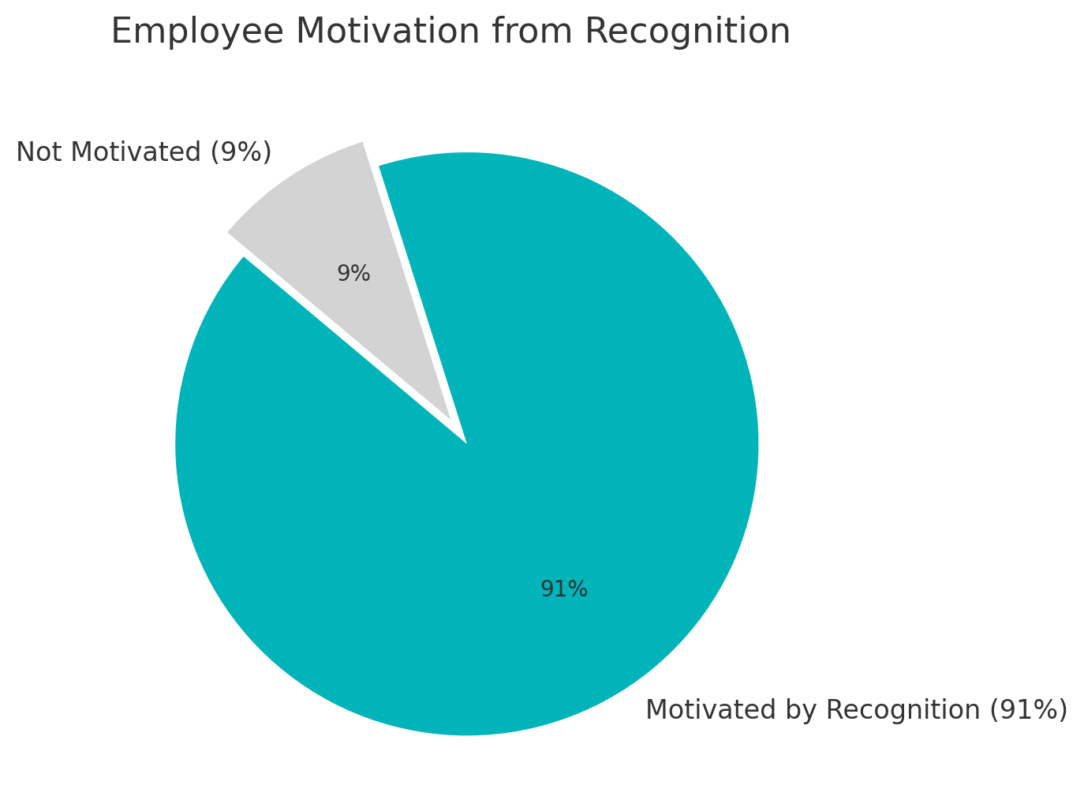
- 91% of employees say recognition motivates them to work harder, which helps companies reach their targets more easily.
- 86% of value-based recognition programs make employees happier, showing how appreciation improves workplace morale.
What Employees Value in Recognition
Not all recognition needs to be about money. Many employees care more about being noticed, appreciated, and given new chances to grow. Understanding what employees value most helps leaders design better recognition programs that truly motivate their teams.

- More than half of employees, about 54% say a simple verbal “thank you” for their daily work means the most. Small words of appreciation often have a big emotional impact.
- Nearly half of employees (47%) value new growth opportunities like training, learning, or promotions as a meaningful form of recognition for their hard work.
- Around 65% prefer non-monetary rewards such as appreciation notes, shout-outs, or small personalized gifts that show genuine thought.
- Many women (36%) appreciate receiving a written “thank you,” saying it feels more heartfelt and memorable.
- For three out of four employees, even a short verbal thank-you is enough to feel satisfied and respected at work.
- Millennials often view career development and learning opportunities as the best kind of recognition rather than bonuses or cash rewards.
- When it comes to rewards, 78% of Millennials enjoy experience-based recognition such as travel or events, while only 30% of Boomers share this preference.

- Among younger workers, 94% of Gen Z employees want regular recognition and feedback to help them stay connected and motivated.
- Employees who are appreciated at least once a month show higher job satisfaction and are more likely to stay loyal to their employer.
Who Drives Recognition in Organizations
Recognition can come from many places inside a company. The source of appreciation often matters as much as the message itself. When praise comes from leaders, managers, or even coworkers, it helps build a stronger sense of trust and teamwork across all levels.
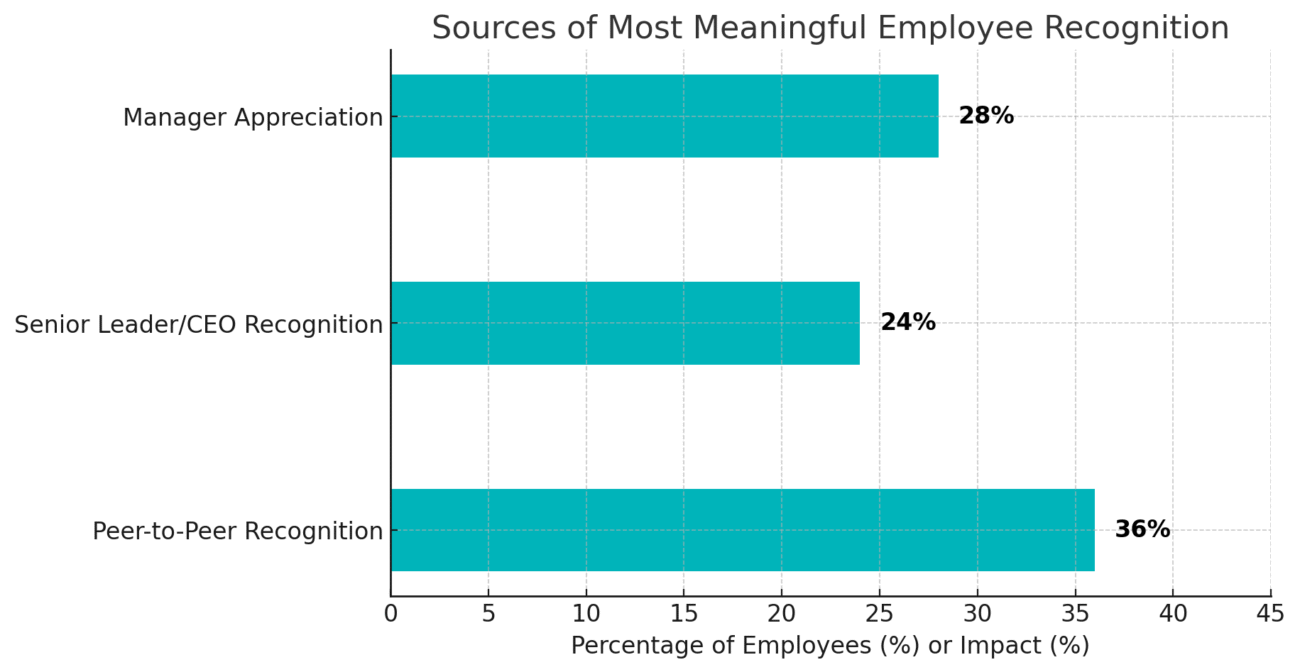
- Many employees say their manager’s appreciation is the most meaningful. About 28% remember recognition from their manager as the most special moment in their career.
- Another 24% of employees say their most memorable recognition came from a senior leader or CEO, which shows how powerful top-level praise can be.
- Peer-to-peer recognition also makes a strong impact. It can help improve financial results by nearly 36% compared to recognition only from managers.
- Managers who regularly thank or praise their teams often lead 40% more engaged employees than those who rarely do.
- Some workers say they rarely hear recognition from their company’s leadership. Around 28% report never receiving any recognition from the CEO or executive team.
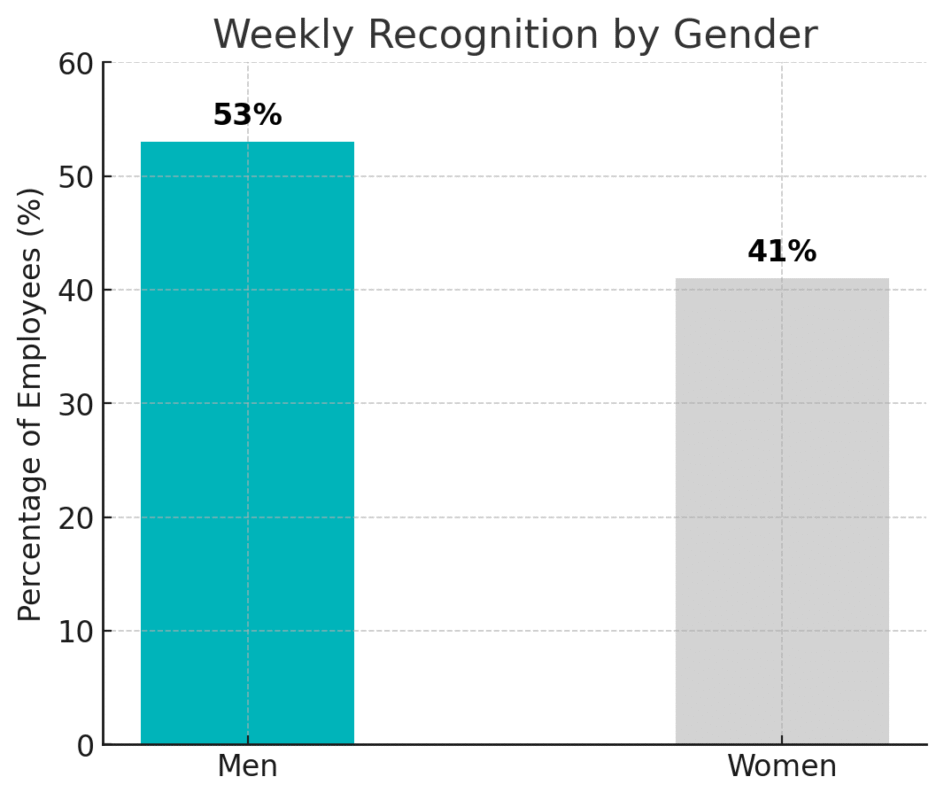
- Gender gaps also exist. More men (53%) receive weekly recognition from their managers than women (41%), showing the need for fair recognition practices.
Recognition in Remote and Global Workplaces
Remote and hybrid work have changed how recognition works. Many employees now work from home or from different locations, and this makes it harder for leaders to show appreciation. Still, regular recognition is just as important for remote teams as it is for those in the office.
- Very few employees receive daily recognition. In fact, only a small percentage say they get thanked for their work every day.
- Weekly recognition is also uncommon, with only about 10% employees saying they receive it that often.
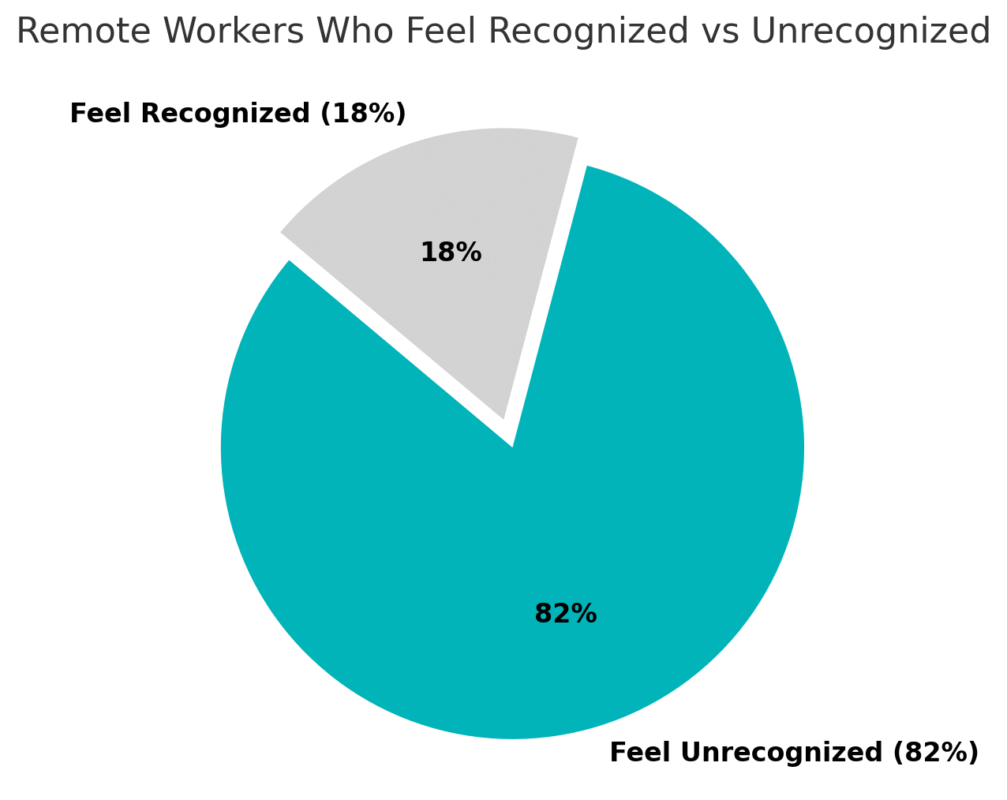
- A large 82% of remote workers feel unrecognized by their employers, showing a big gap in how companies support their remote teams.
- Research shows that virtual recognition programs can increase engagement by about 30%, proving that digital tools can make a real difference.
- Only about one-third of remote or hybrid companies have a formal recognition plan in place, leaving most workers without regular feedback.

- Many working mothers who work remotely feel overlooked. Around 43% say they have missed out on promotions because their efforts went unseen.
- Globally, low engagement levels have cost businesses around $438 billion in lost productivity, highlighting how serious this issue is.
- In Australia, nearly half of workers receive monthly recognition, yet only 15% feel it truly makes a difference.
- Similarly, in Singapore, about 32% of employees say they think about leaving their jobs because they don’t feel valued or appreciated.
How Recognition Differs by Company Size
Different types of companies handle recognition in different ways. The size of a business often affects how it appreciates its people. Small companies may rely more on personal, verbal recognition, while larger companies use structured systems and formal programs.

- In small businesses, managers often prefer direct, informal ways to appreciate their teams. About 78% of these companies use verbal recognition like thank-you messages or shout-outs.
- Smaller companies that make recognition a regular practice see around 20% higher employee engagement, which shows how simple appreciation can create big results.
- The same small firms also experience an 18% lower turnover rate when they use consistent recognition methods.
- In medium-sized companies, teamwork plays a major role. Around 72% of them use team-based awards to recognize whole groups instead of just individuals.
- Formal recognition programs in these mid-sized companies lead to 25% better employee retention and a 15% increase in productivity.
- Larger organizations depend on enterprise-level platforms to manage recognition at scale. About 80% of big companies use digital systems for this purpose.
- These structured recognition programs bring measurable results — with 22% higher productivity and 28% lower absenteeism across large firms.
Barriers and Technology in Recognition
Even though most leaders agree that recognition is important, many companies still struggle to do it right. Common barriers like lack of time, tools, or clear systems can stop managers from appreciating their teams regularly. Understanding these challenges helps organizations build better and more consistent recognition programs.
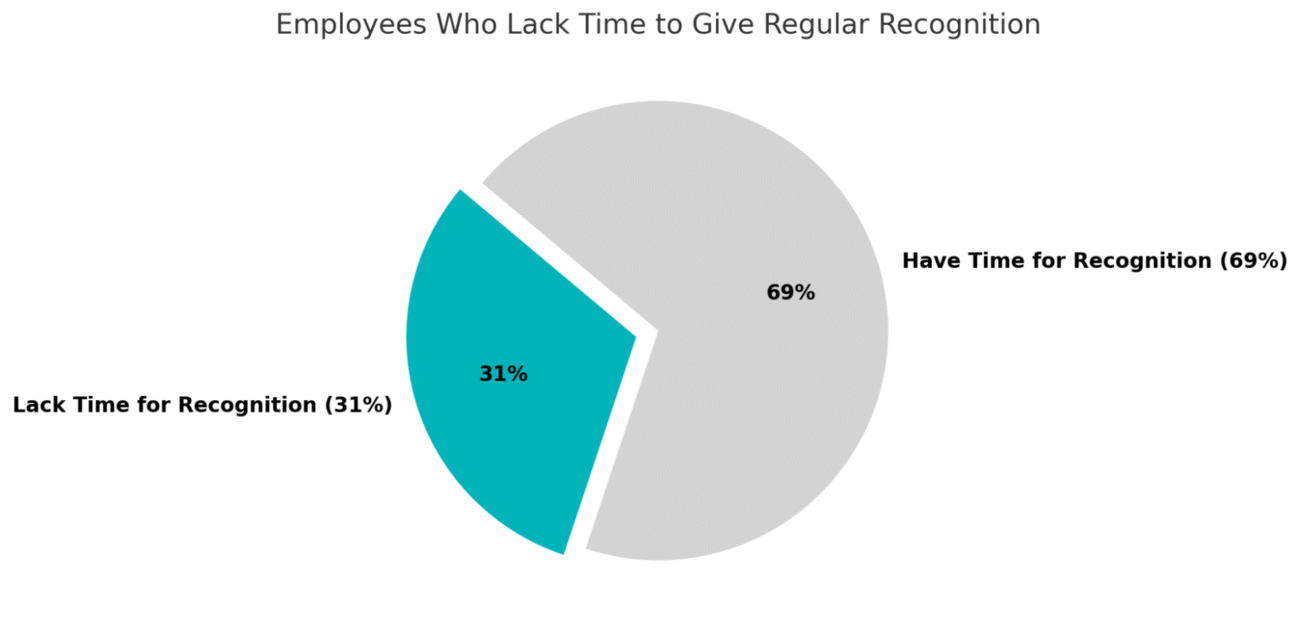
- About 31% employees say they do not have enough time to give regular recognition, believe this is the biggest reason appreciation often gets skipped.
- For nearly one in five employees, giving recognition simply is not part of their daily habit, so it often gets forgotten.
- Around 8% feel their company culture does not encourage appreciation, which makes recognition less common in their workplace.
- A smaller group, about 5%, are unsure how to give recognition properly, meaning they need more training or guidance.
- As technology grows, some companies are using AI for recognition, but 53% of employees do not believe AI can make appreciation feel genuine.
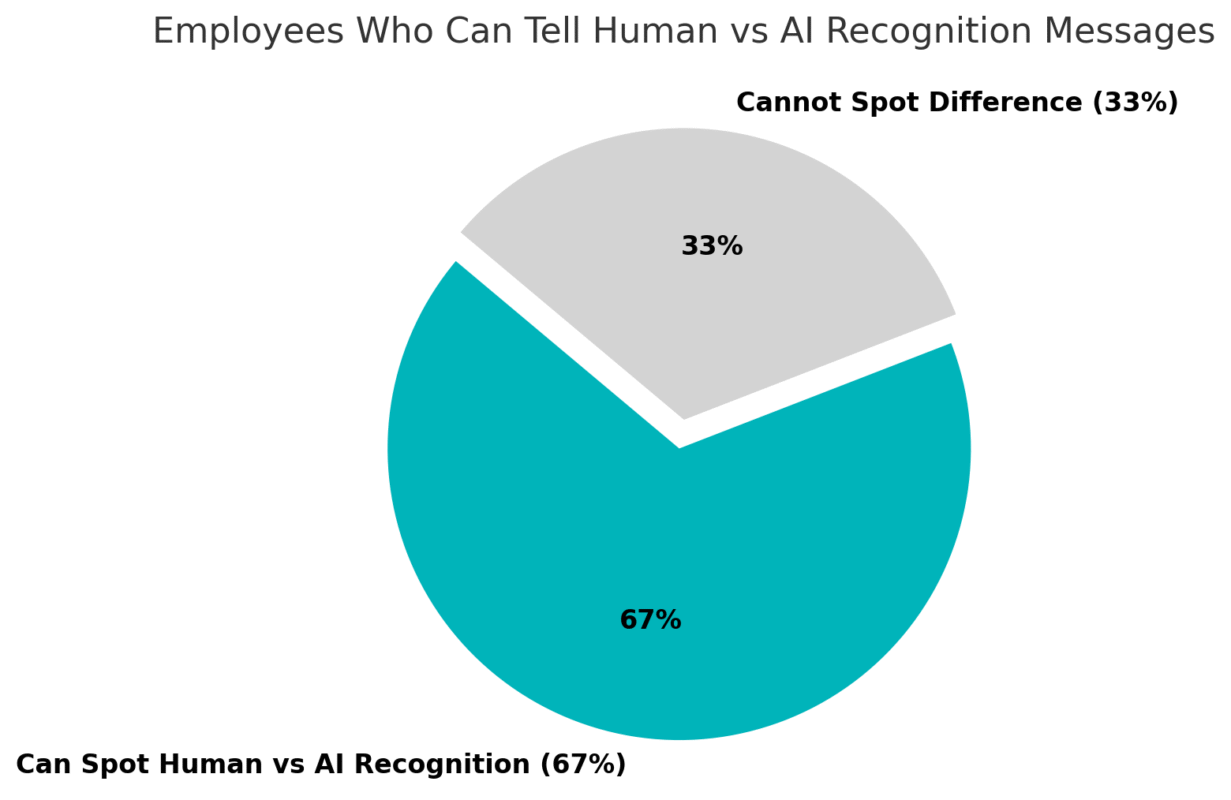
- Most people can still tell the difference. About 67% say they can easily spot whether a recognition message was written by a human or AI.
- On the other hand, many HR leaders are using technology positively. Around 65% use recognition data to improve learning and development strategies.
- The overall employee recognition market is growing fast, with a 15.6% annual growth rate between 2023 and 2032, showing that more businesses are investing in this area.
Final Words
Employee recognition is more than just saying “thank you.” It’s a business strategy that builds trust, motivation, and loyalty. When employees feel noticed and appreciated, they work harder, stay longer, and help the company grow faster.
In today’s workplace, leaders must focus on making recognition consistent and meaningful. It can be a kind word, a simple note, or a small reward — what matters most is the thought behind it.
Corporate gifting can make recognition more personal and lasting. A thoughtful gift shows that the company truly values its people. It turns appreciation into something memorable, helping employees feel proud of where they work.
By combining regular recognition with thoughtful gestures, companies can create a workplace culture where everyone feels valued and inspired to give their best every day.
Data sources
- https://www.gallup.com/workplace/231659/performance-measures-motivate-madden-employees.aspx
- https://teamflect.com/blog/employee-engagement/remote-work-statistics#employee-recognition-and-belonging-statistics-in-remote-companies
- https://blog.perceptyx.com/7x-more-engaged-data-shows-impact-of-meaningful-employee-recognition
- https://www.gartner.com/en/documents/3982467
- https://www.giftafeeling.com/blogs/our-blogs/employee-recognition-statistics-2024
- https://www.deloitte.com/ie/en/services/deloitte-private/perspectives/recognition-programmes.html
- https://www.gallup.com/workplace/650174/employee-retention-depends-getting-recognition-right.aspx
- https://www.achievers.com/resources/state-recognition-report/
- https://gethppy.com/employeerecognition/why-values-based-employee-recognition-is-essential
- https://www2.deloitte.com/content/dam/Deloitte/us/Documents/about-deloitte/us-about-deloitte-the-practical-magic-of-thank-you-june-2019.pdf
- https://www.giftafeeling.com/blogs/our-blogs/employee-recognition-statistics-2024
- https://www.gallup.com/workplace/236441/employee-recognition-low-cost-high-impact.aspx
- https://safetyjackpot.com/employee-recognition-statistics/
- https://nectarhr.com/blog/employee-recognition-statistics
- https://vorecol.com/blogs/blog-the-impact-of-remote-work-on-recognition-programs-38118
- https://www.gallup.com/workplace/349484/state-of-the-global-workplace.aspx
- https://www.alliedmarketresearch.com/employee-recognition-and-reward-system-market
- https://awardmaven.com/white-paper-most-effective-recognition-programs-by-company-size/
- https://www.appraisd.com/blog/employee-recognition-barriers
👉 Explore our other statistical report:
- Corporate gifting statistics you need to know
- Employee engagement statistics you need to know
- Impotant human resources (HR) statistics
FAQs
How does recognition affect employee retention?
Studies show that recognized employees are 45% less likely to leave within two years. Companies with recognition-rich cultures also see a 31% lower turnover rate, proving that appreciation directly helps businesses retain skilled and motivated employees.
What is the link between recognition and employee engagement?
Recognition drives engagement. Well-recognized employees are 7 times more likely to be fully engaged, while recognition that meets key goals can make them 9 times more engaged. These results lead to stronger teamwork and better business performance.
How does recognition improve employee productivity?
Data shows that recognized employees show 17% higher productivity and contribute to a 14% rise in company performance. A structured recognition program can also deliver an 11.1% increase in individual employee output.
What kind of recognition do employees prefer most?
Around 54% of employees prefer verbal thank-yous, while 47% value growth opportunities. About 65% prefer non-monetary rewards, and 94% of Gen Z want frequent feedback. These insights highlight the need for personalized, consistent recognition strategies.
How do recognition trends differ in remote workplaces?
Only 2% of employees receive daily recognition, and 82% of remote workers feel unnoticed. However, virtual recognition programs can increase engagement by 30%, proving that online appreciation still builds strong team morale.
How are companies using technology for recognition?
The recognition industry is growing at a 15.6% annual rate from 2023 to 2032. Around 65% of HR leaders already use recognition data to guide employee development, while 53% of workers remain unsure about AI-driven recognition.