


Planning Diwali gifts for your clients, partners, or employees?
We’ll help you choose Diwali gifts that fit your budget and brand—quick, simple, and hassle-free. Just reach out to our team and we’ll take care of the rest.
 4.8 out of 5 ★★★★★ by 1100+ brands
 Employee satisfaction affects every part of a business. Satisfied employees stay longer, perform better, and help companies grow faster. Low satisfaction can lead to burnout, poor engagement, high turnover, and lower productivity.
In recent years, workplace expectations have changed fast. Employees now care more about work-life balance, flexibility, mental health, career growth, and company culture. Remote and hybrid work models also changed how employees view job satisfaction.
This article shares the latest employee satisfaction statistics for 2026. The data covers employee engagement, burnout, remote work, retention, workplace culture, mental health, leadership, and more. These statistics will help businesses, HR teams, managers, and researchers understand what employees want from the modern workplace.
The statistics included in this article are curated from industry reports, workplace surveys, research studies, and trusted data sources. For better reference and deeper research, all source links are listed at the end of the article.
Key Employee Satisfaction Statistics
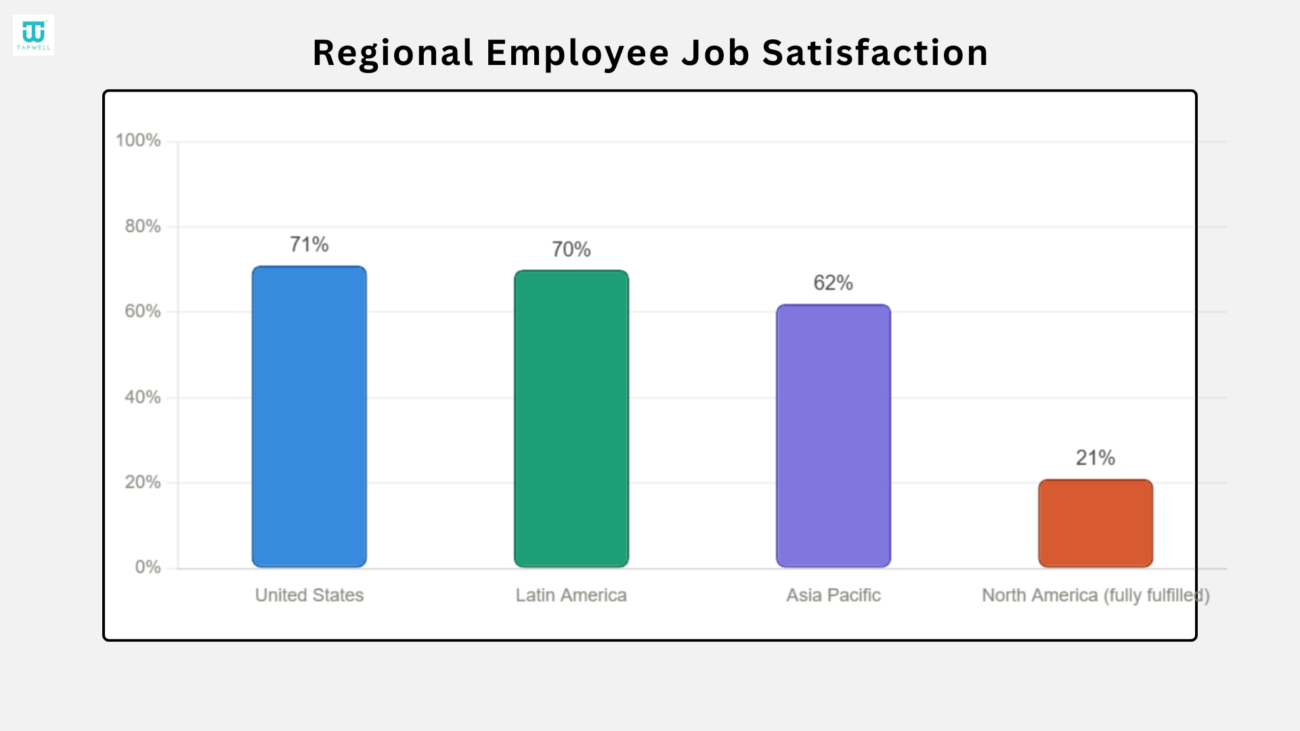
- Around 71% of employees in the United States say they feel satisfied with their jobs.
- Employees in the Asia Pacific region reported a 62% job satisfaction rate.
- Workers across the European Union rated job satisfaction at an average of 7.4 out of 10.
- Around 70% of employees in Latin America say they feel satisfied with their jobs.
- Only 21% of employees in North America say they feel completely fulfilled in their current jobs.
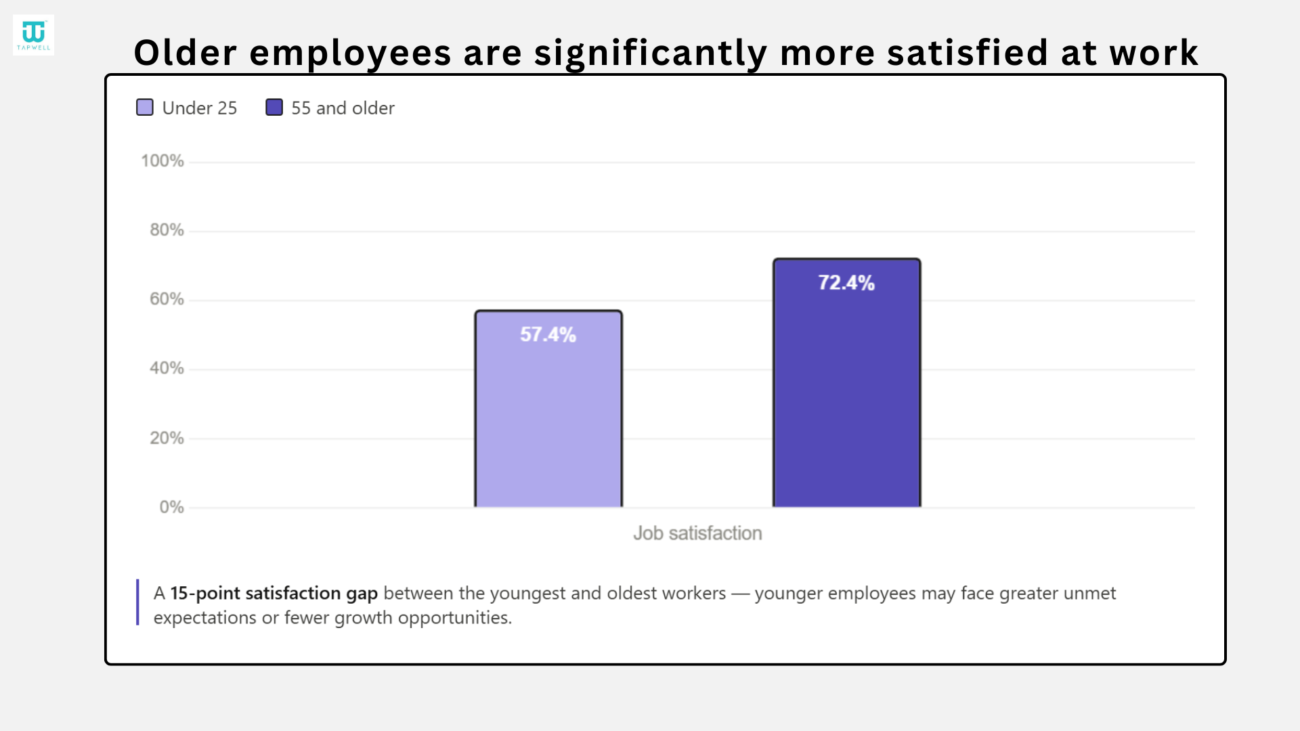
- Employees aged 55 and older report the highest job satisfaction levels at 72.4%.
- Workers under the age of 25 report lower job satisfaction levels at 57.4%.
- Gen X employees report the highest workplace satisfaction levels among all generations.
- Around 83% of employees say work life balance is one of the most important factors when choosing a job.
- Nearly 89% of fully remote employees say they feel satisfied with where and when they work.
Employee Satisfaction Statistics and Workplace Trend
General employee satisfaction statistics help businesses understand how employees feel about their jobs, workplace culture, career growth, and daily work experience. High employee satisfaction often improves productivity, retention, engagement, and overall business performance.
These statistics also show how workplace expectations continue to change across different regions, age groups, and industries.
- Around 71% of employees in the United States say they feel satisfied with their jobs, while nearly 20% still feel neutral about their overall workplace experience.
- Employees in the Asia Pacific region reported a 62% job satisfaction rate in 2024, which increased by 5 percentage points compared to the previous year.
- Around 70% of employees in Latin America describe themselves as satisfied with their jobs despite ongoing concerns about pay and economic uncertainty.
- Only 21% of employees in North America say they feel completely fulfilled in their current jobs, highlighting a major gap between employment and workplace satisfaction.
- Workers across the European Union gave job satisfaction an average rating of 7.4 out of 10, with countries like Finland, Cyprus, and Romania reporting the highest scores.
- The Conference Board reported the biggest yearly increase in employee satisfaction since 1987, with satisfaction levels rising by 5.7 percentage points in a single year.
Employee Engagement Statistics
Employee engagement statistics show how emotionally connected employees feel toward their work, company, and goals. Strong employee engagement improves productivity, teamwork, retention, and overall employee satisfaction. Low engagement can increase turnover, reduce motivation, and hurt business performance over time.
- Only 21% of employees worldwide say they feel engaged at work, while nearly 79% report feeling disengaged or emotionally disconnected from their jobs.
- Companies with highly engaged employees can achieve up to 24% higher profitability compared to businesses with low engagement levels.
- Organizations with engaged workforces experience 43% lower employee turnover, showing a strong connection between engagement and retention.
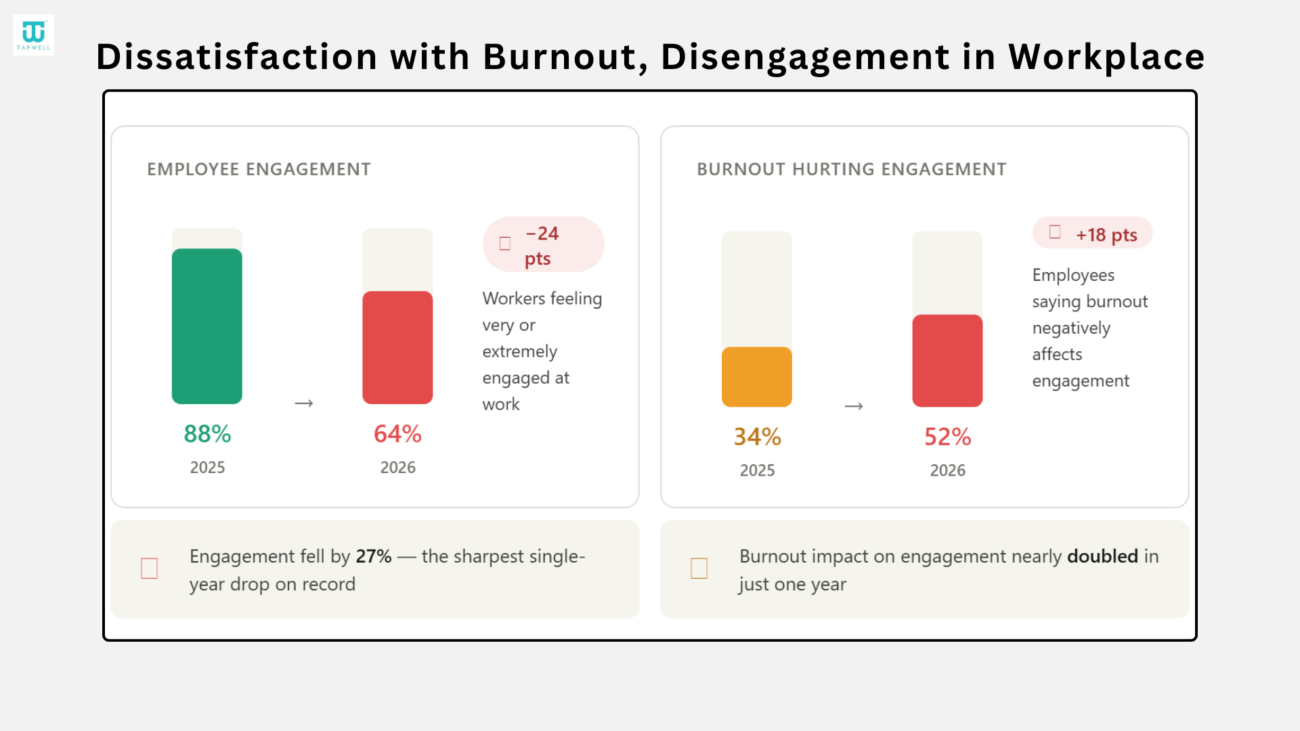
- Employee engagement levels dropped sharply in 2026, with only 64% of workers saying they feel very or extremely engaged compared to 88% in the previous year.
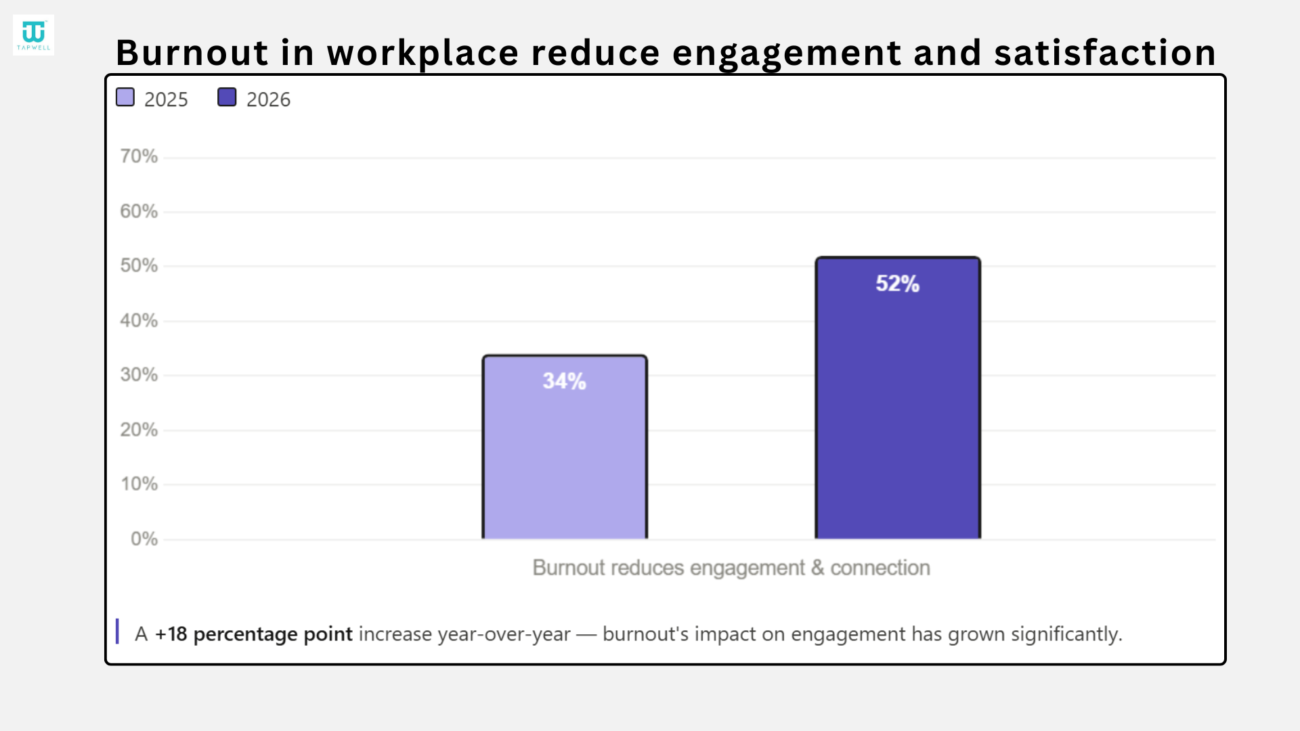
- Around 52% of employees say burnout negatively affects how engaged they feel at work, which increased significantly from 34% in 2025.
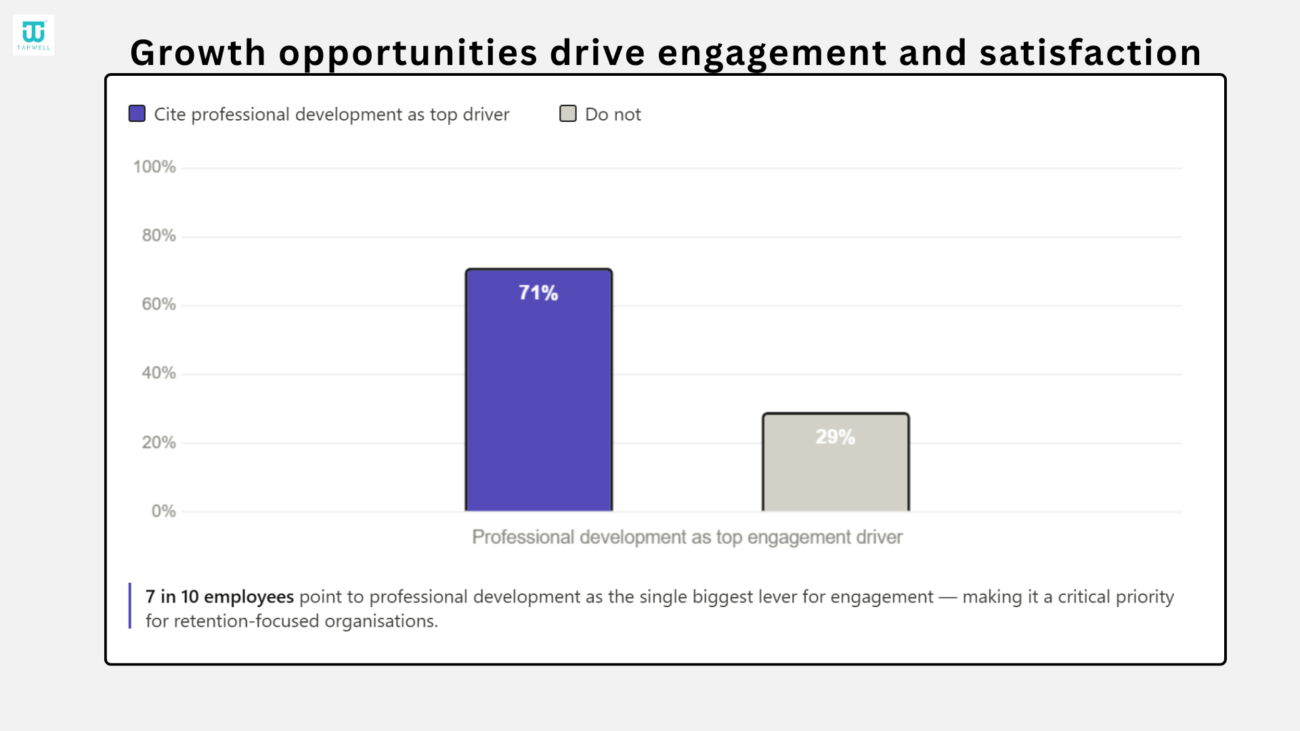
- About 71% of employees say professional development and career growth opportunities play a major role in improving workplace engagement.
- Gallup estimates that falling employee engagement levels caused nearly $438 billion in lost productivity worldwide after global engagement dropped from 23% to 21%.
- Disengaged employees and quiet quitters now cost the global economy nearly $9.6 trillion, which equals around 9% of the world’s total GDP.
Work Life Balance Statistics
Work life balance statistics show how employees manage their personal life alongside work responsibilities. A healthy work life balance improves employee satisfaction, reduces stress, increases retention, and helps employees stay productive for longer periods. These statistics also show why flexibility has become one of the biggest workplace priorities in recent years.
- Around 83% of employees say work life balance is one of the most important factors when choosing a job, making it more important than salary for many workers.
- About 28% of employees now rank work life balance as their top workplace priority, while 27% place compensation first.
- Nearly 70% of employees say their work life balance improved during the past year due to flexible and remote work arrangements.
- Around 61% of workers say flexible work schedules give them more time for family activities and personal interests outside work.
- About 76% of employees say improved work life balance is the biggest advantage of hybrid work models.
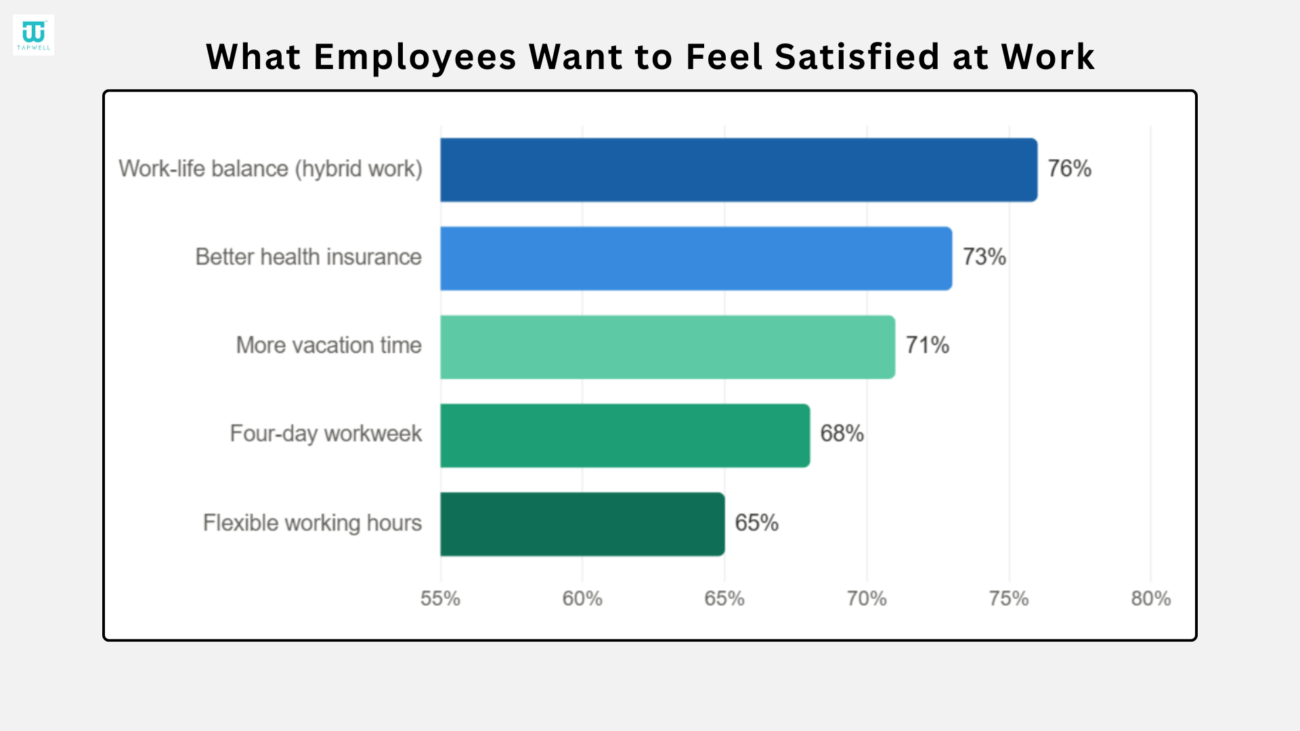
- Around 73% of employees say better health insurance benefits would improve job satisfaction, while 71% want more vacation time, 68% prefer a four day workweek, and 65% want more flexible working hours.
- About 70% of employees report lower stress levels after moving away from traditional office based work environments.
- Nearly two thirds of employees say they can disconnect from work easily at least most of the time, helping them maintain healthier work routines.
- Around 55% of workers say working from home helps them focus better because they face fewer distractions during the workday.
- In the United Kingdom, 86% of hybrid employees say removing daily commuting improved their work life balance directly.
Remote and Hybrid Work Satisfaction Statistics
Remote and hybrid work statistics show how flexible work models affect employee satisfaction, productivity, focus, and retention. Many employees now prefer flexible work arrangements because they improve work life balance, reduce commuting stress, and give employees more control over their schedules and work environment.
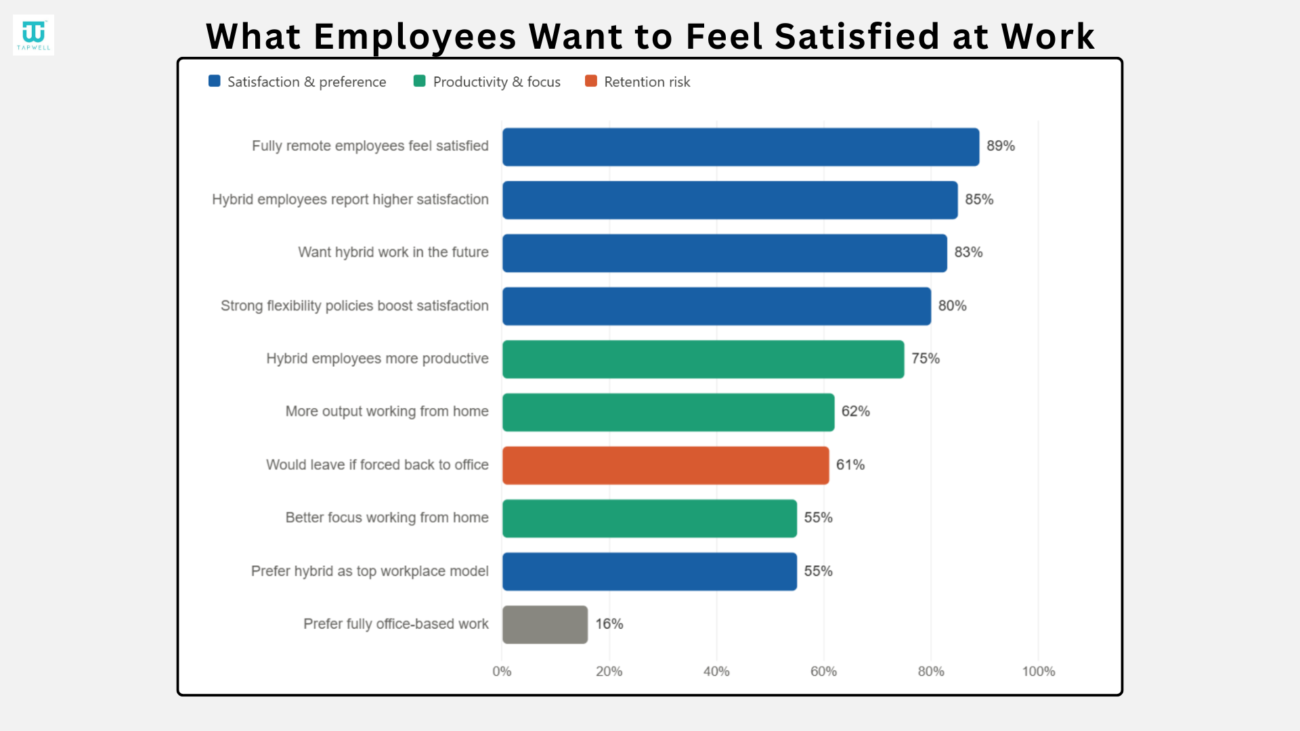
- Around 89% of fully remote employees say they feel satisfied with where and when they work.
- About 85% of hybrid employees report higher job satisfaction when they split their workweek between home and office.
- Companies with strong flexibility policies report employee satisfaction levels as high as 80%.
- Nearly 75% of hybrid employees say flexible work arrangements help them become more productive during the workday.
- Around 62% of employees say they complete more work at home compared to working full time from the office.
- More than 55% of remote employees say working from home helps them focus better because they face fewer distractions.
- Around 26% of employees say avoiding daily traffic and commuting is the biggest benefit of remote work.
- Nearly 61% of workers say they would consider leaving their jobs if employers forced them to return to the office full time.
- Only 16% of professionals say they prefer fully office based jobs, while 55% rank hybrid work as their top workplace preference.
- Around 83% of employees say they want some type of hybrid work arrangement in the future.
Employee Burnout and Workplace Stress Statistics
Employee burnout and workplace stress statistics show how pressure, overwork, and emotional exhaustion affect employee satisfaction and workplace performance. High stress levels can lower engagement, reduce productivity, increase absenteeism, and push employees to leave their jobs. These statistics highlight why companies now focus more on employee wellbeing and healthier work environments.
- More than 75% of employees worldwide say they experienced burnout in 2026, showing how common workplace stress has become across industries.
- According to DHR Global’s 2026 Workforce Trends Report, 83% of employees report experiencing at least some level of burnout, which remained nearly unchanged from 82% in the previous year.
- Around 33% of workers say they experienced burnout symptoms such as emotional exhaustion, low motivation, and mental detachment during the past year.
- About 58% of employees report feeling pressure to stay constantly available for work messages, calls, or tasks even outside normal working hours.
- Around 44% of workers say they now spend more time working compared to when they worked fully from office locations.
- Employees experiencing burnout are 63% more likely to take sick leave compared to employees with healthier work conditions.
- Companies with high burnout levels report productivity losses between 18% and 20%, along with lower employee motivation and weaker team performance.
- Around 52% of employees say burnout directly reduces how engaged and connected they feel at work, compared to 34% in 2025.
- Nearly 70% of remote and hybrid employees say their stress levels decreased after moving away from traditional office based work environments.
- Only 14% of remote employees say their stress levels increased during the past 12 months, while most workers report improved work-life balance and lower workplace pressure.
Mental Health and Employee Wellbeing Statistics
Mental health and employee wellbeing statistics show how emotional health, workplace support, and wellness programs affect employee satisfaction and productivity. Employees who feel mentally supported at work usually stay engaged longer, perform better, and report higher job satisfaction. These statistics also show why companies now invest more in mental health support and wellbeing initiatives.
- Only 21% of employees strongly believe their employer genuinely cares about their overall wellbeing and workplace health.
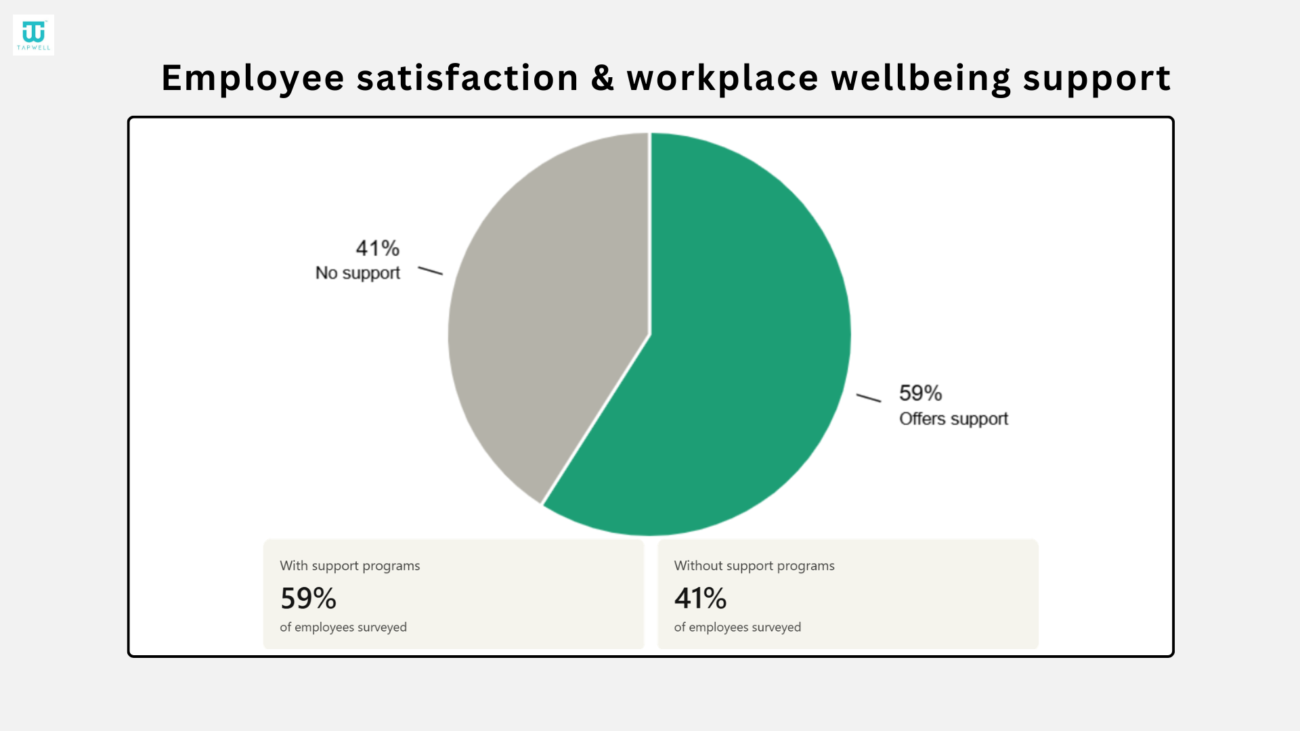
- Around 59% of employees say their workplace currently offers some form of mental health or wellbeing support program.
- Nearly 77% of workers rated their mental wellbeing at 7 out of 10 or higher during the past 12 months.
- Only 48% of employees say they feel confident that their employer truly cares about employee mental health, down from 54% in 2024.
- About 61% of employees say they feel comfortable discussing mental health concerns openly at work.
- Companies that offer structured wellbeing programs report 25% to 40% lower employee turnover rates because employees feel more supported and valued.
- The World Health Organization estimates that depression and anxiety cause nearly $1 trillion in lost productivity worldwide every year.
Company Culture and Leadership Statistics
Company culture and leadership statistics show how workplace environment, management quality, and organizational support affect employee satisfaction. Strong leadership and positive workplace culture help employees stay motivated, engaged, and loyal to their companies. Poor culture and weak leadership often increase turnover, stress, and dissatisfaction at work.
- Only 31% of employees say they feel very satisfied with their company culture, showing that many workplaces still struggle to build positive employee experiences.
- Around 36% of workers believe their company culture is clearly defined and actively supports business performance and employee success.
- Nearly 93% of employees say workplace culture plays an important role in their overall employee experience, including 53% who describe it as very important.
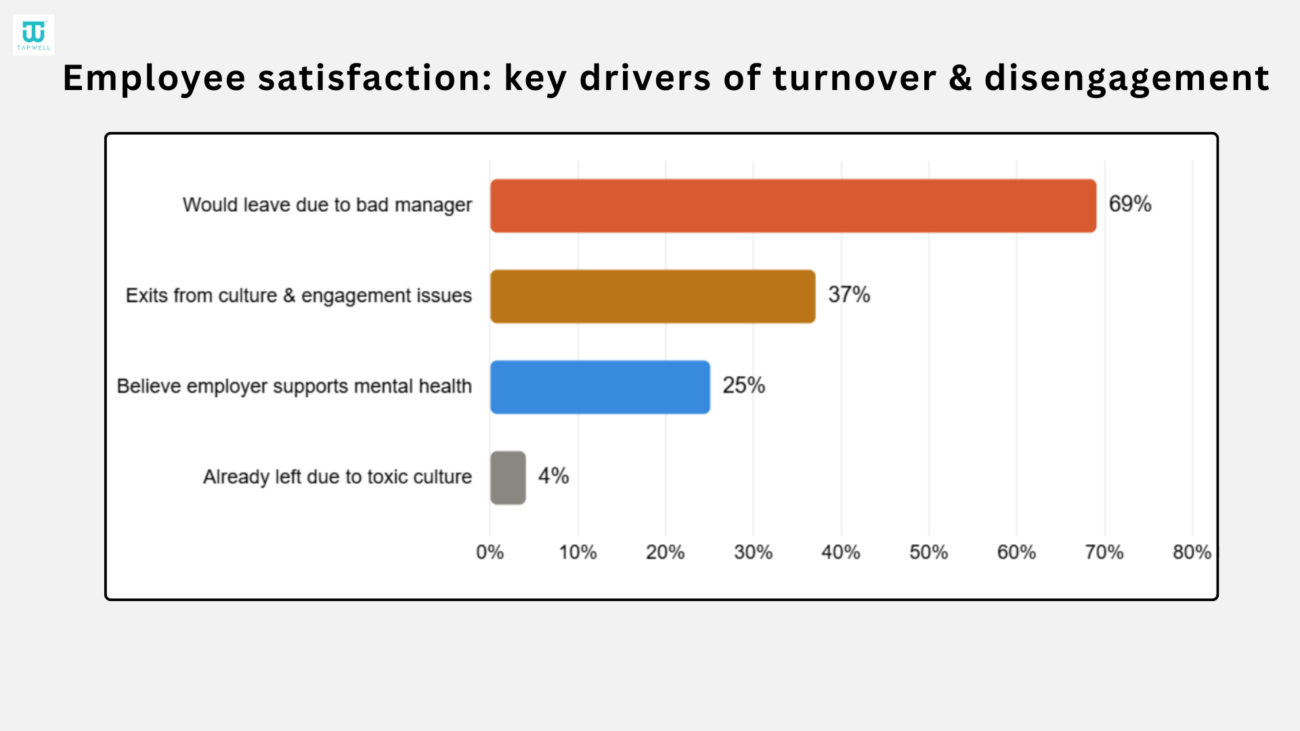
- About 69% of employees say they would leave their jobs because of a bad manager, making poor leadership one of the biggest drivers of employee turnover.
- Around 37% of employee exits happen because of engagement and culture related issues such as poor workplace culture, lack of growth, and unfulfilling work.
- Nearly 4% of employees say they already left a job because of toxic workplace culture and unhealthy work environments.
- Only 25% of employees believe their employer genuinely prioritizes and supports mental health in the workplace.
- Around 48% of employees say they trust that their employer cares about employee wellbeing and mental health support.
Employee Retention and Turnover Statistics
Employee retention and turnover statistics show why employees stay in jobs or decide to leave their employers. High employee satisfaction often improves retention, while poor management, limited growth opportunities, and weak workplace support increase turnover. These statistics help companies understand what drives long-term employee loyalty and workplace stability.
- Around 38% of professionals say they are already searching or planning to search for a new job during the first half of 2026.
- Gallup reports that nearly 50% of employees in the United States were either watching for or actively seeking new job opportunities in 2024, marking the highest turnover risk level in nine years.
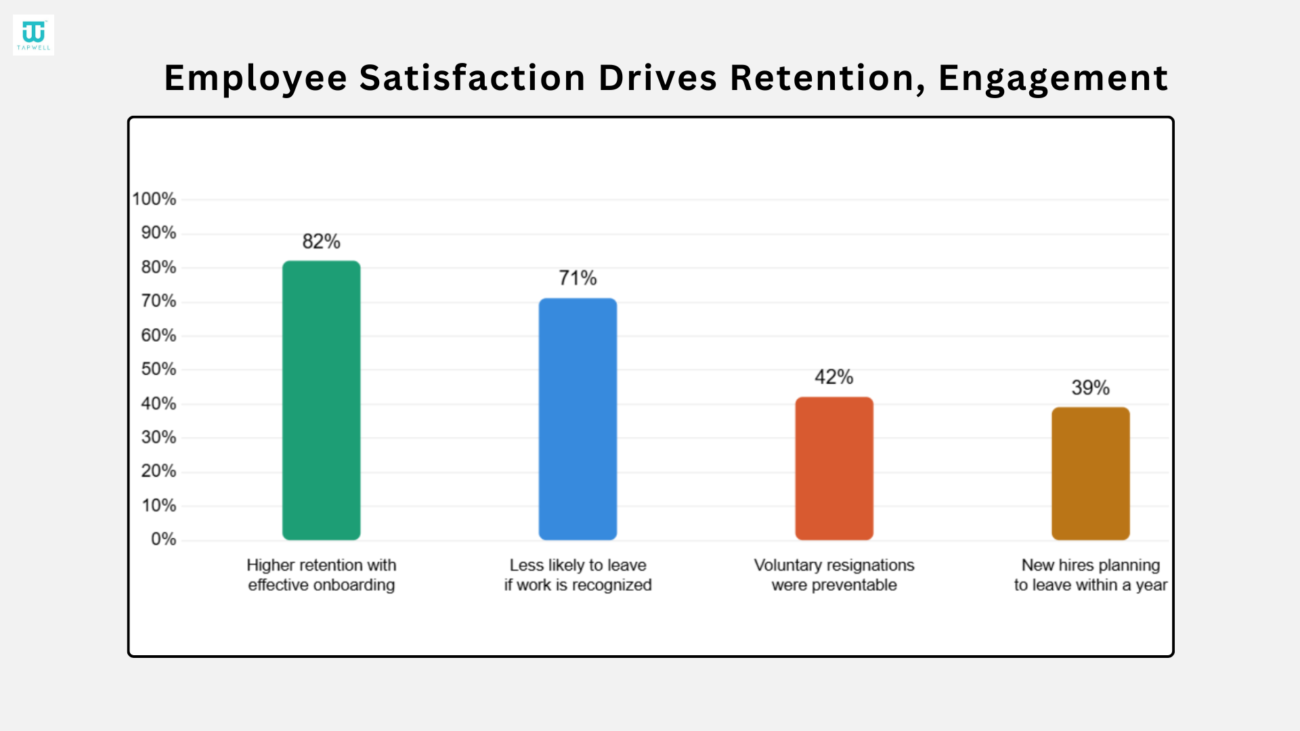
- Around 71% of employees say they would feel less likely to leave their jobs if employers recognized and appreciated their work more often.
- Nearly 39% of employees with less than six months of tenure say they plan to leave their jobs within the next year.
- Employers could have prevented nearly 42% of voluntary employee resignations by improving workplace experience, engagement, and management practices.
- Companies with effective onboarding programs achieve 82% higher new hire retention rates and more than 70% improvement in employee productivity.
- Replacing an employee can cost companies up to 200% of the employee’s annual salary depending on the role, seniority, and onboarding costs involved.
- Around 73% of executives and 72% of employees believe companies must improve workforce development and career growth opportunities to retain employees successfully.
Career Growth and Employee Recognition Statistics
Career growth and employee recognition statistics show how learning opportunities, promotions, appreciation, and meaningful work affect employee satisfaction. Employees who feel valued and see clear growth opportunities are more likely to stay engaged, productive, and loyal to their organizations.
- Around 71% of employees say professional development opportunities play the biggest role in improving workplace engagement and long term job satisfaction.
- Nearly 91% of highly engaged employees say they feel satisfied with the career growth and learning opportunities available at their workplace.
- About 23% of employees in the United States say they feel dissatisfied with their career growth and advancement opportunities at work.
- Around 71% of employees say they would be less likely to leave their jobs if managers and companies recognized their contributions more frequently.
- Around 50% of Gen Z employees and 43% of millennials say they rejected certain work assignments because of ethical concerns or value mismatches.
- About 73% of executives and 72% of employees believe companies must connect workforce development programs more closely with future career opportunities and business goals.
Employee Satisfaction by Generation and Region Statistics
Employee satisfaction by generation and region statistics show how workplace expectations differ across age groups and geographic regions. These statistics help businesses understand how factors like age, culture, work priorities, and economic conditions influence employee satisfaction levels around the world.
- Employees aged 55 and older report the highest job satisfaction levels at 72.4%, while workers under the age of 25 report much lower satisfaction levels at 57.4%.
- Workers across the European Union rated job satisfaction at an average of 7.4 out of 10 in 2025, with countries like Finland, Cyprus, and Romania reporting the highest satisfaction scores.
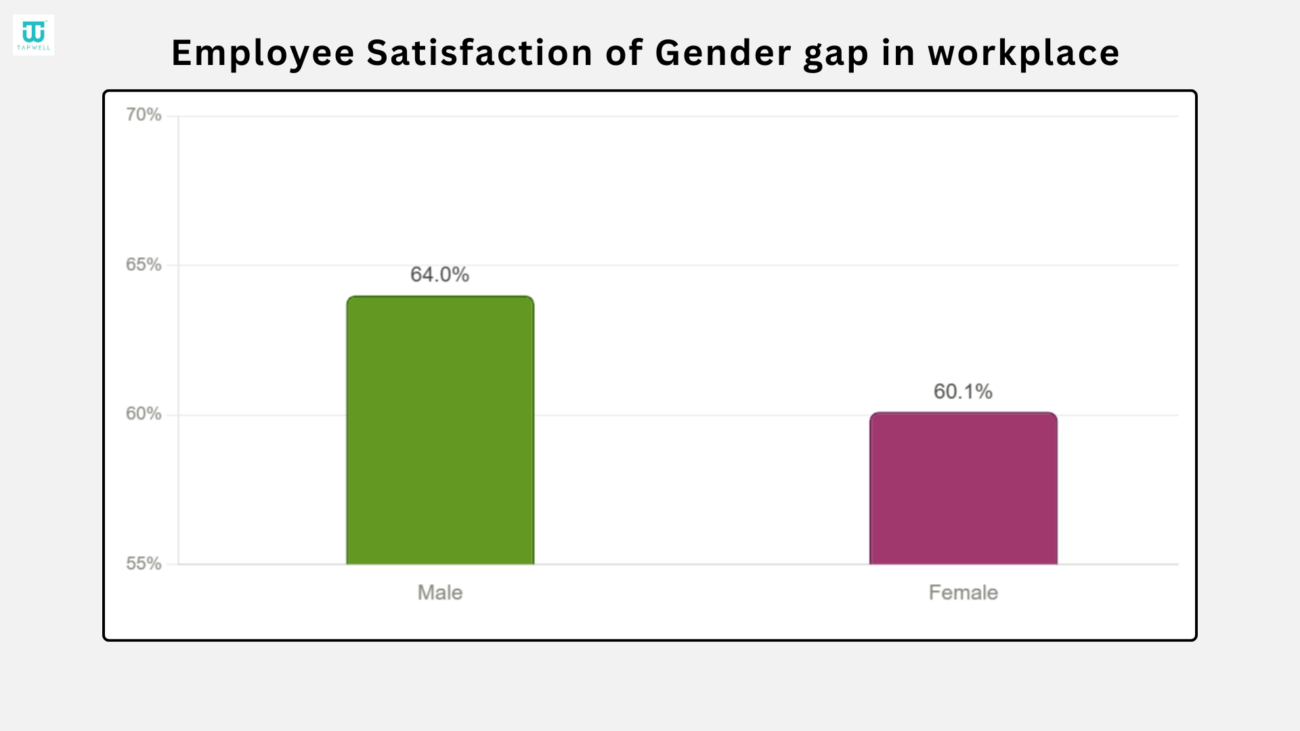
- Male employees report an average job satisfaction level of 64%, while female employees report an average satisfaction level of 60.1%.
- Around 86% to 89% of Gen Z employees and millennials say meaningful work and purpose strongly influence their overall job satisfaction levels.
How TapWell Helps Companies Improve Employee Satisfaction
Employee satisfaction and employee engagement now play a major role in retention, productivity, and workplace culture. Employees today expect recognition, appreciation, flexibility, and meaningful workplace experiences beyond salary alone.
Many companies now use corporate gifting and employee reward programs to improve engagement and make employees feel valued. Personalized gifts, festive hampers, onboarding kits, wellness products, and reward programs can help improve morale and strengthen employee loyalty.
👉 Buy Employee Awards & Recognition Trophies Online
Businesses looking to improve employee satisfaction, employee retention, and workplace engagement through corporate gifting can explore solutions from TapWell, India’s leading corporate gifting company.
Founded in 2015, TapWell has helped businesses improve employee appreciation and workplace satisfaction through personalized gifting programs, employee reward solutions, onboarding kits, festive hampers, branded merchandise, and wellness gifts.
The company has completed 1,834 projects, served 408 clients, and delivered more than 621,542 products while offering over 4,300 customizable gifting options for businesses across different industries.
Data Sources
- https://fmcgroup.com/remote-workers-work-life-balance-stats/
- https://www.coworkingcafe.com/blog/remote-work-well-being-survey-2026/
- https://codegnan.com/work-life-balance-statistics/
- https://www.metaintro.com/blog/over-75-percent-workers-suffer-burnout-2026
- https://www.dhrglobal.com/insights/workforce-trends-report-2026/
- https://www.metaintro.com/blog/over-75-percent-workers-suffer-burnout-2026
- https://www.roberthalf.com/us/en/insights/research/remote-work-statistics-and-trends
- https://www.gallup.com/workplace/349484/state-of-the-global-workplace.aspx
- https://www.instride.com/insights/employee-engagement-statistics/
- https://www.aseonline.org/News-Events/ASE-News/EverythingPeople-This-Week/new-report-highlights-what-employees-really-want-in-2026
- https://www.gallup.com/workplace/659279/global-engagement-falls-second-time-2009.aspx
- https://www.who.int/news-room/fact-sheets/detail/mental-health-at-work
- https://www.gallup.com/workplace/349484/state-of-the-global-workplace.aspx
- https://www.pwc.com/gx/en/asia-pacific/hope-and-fears/2024/asia-pacific-hopes-and-fears-2024.pdf
- https://www.deloitte.com/global/en/about/press-room/deloitte-2024-gen-z-and-millennial-survey.html
- https://www.gallup.com/workplace/646538/employee-turnover-preventable-often-ignored.aspx
- https://nectarhr.com/blog/employee-recognition-statistics
- https://www.paycor.com/resource-center/articles/employee-retention-statistics/
- https://www.selectsoftwarereviews.com/blog/workplace-diversity-statistics
- https://www.surveymonkey.com/curiosity/work-life-balance-statistics/
- https://blog.theinterviewguys.com/state-of-remote-work-2025/