
Gen Z is entering the workforce with new expectations, and many companies are struggling to keep up. Traditional corporate culture often feels rigid, unclear, and disconnected from what young employees truly value.
This gap leads to low engagement and high turnover. To attract and retain Gen Z talent, businesses must understand what really matters to them and adapt their culture accordingly.
In this guide, you will understand the key shifts shaping Gen Z workplace expectations and what companies must change to attract and retain them.
TL;DR
- Gen Z expects flexible work and trusts results over fixed office hours.
- They value purpose, mental health, and real work-life balance.
- Continuous growth, learning, and clear career paths matter to them.
- Transparent communication and fair recognition build loyalty.
- Modern tools and digital workflows are basic expectations, not perks.
Who is Gen Z, and how is Gen Z different at work?
Gen Z includes people born between 1997 and 2012. They grew up with smartphones, social media, and fast internet. They are the first fully digital generation.
At work, Gen Z wants flexibility and real growth, not just a fixed desk and a yearly review. They like open and honest communication where leaders actually listen.
They care about purpose and want to know why their work matters. Mental health and work-life balance are important to them, not optional extras. They expect modern tools that make work easier, not harder.
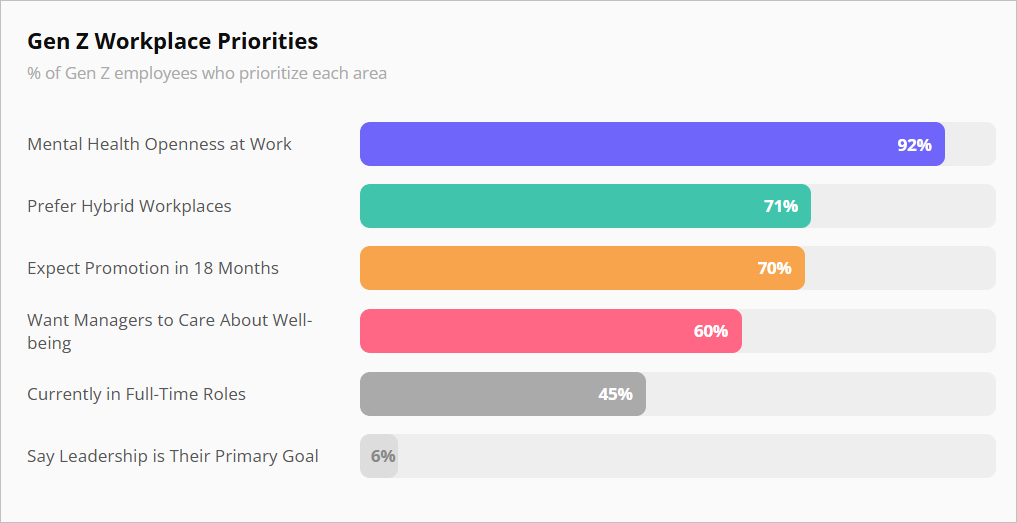
Here are statistics that show the mindset of Gen Z in the workplace
- By 2030, Gen Z will make up about 30% of the global workforce. This highlights their growing influence on workplace norms.
- Only 45% of Gen Z have full-time roles today, showing many are in gigs, part-time, or flexible work arrangements.
- 71% of Gen Z want to work in hybrid workplaces, preferring a mix of remote and office work.
- 70% of Gen Z recent graduates expect to be promoted within the first 18 months. This shows they value rapid career growth.
- 92% of Gen Z want to discuss mental health at work, signalling strong expectations for support and well-being.
- 60% expect managers to care about their well-being, not just productivity.
- Only 6% of Gen Z say reaching a leadership position is their primary career goal, showing a shift from traditional career ladders to balanced and meaningful work.
- Gen Z and millennials rank work-life balance higher than climbing the corporate ladder, according to global survey data.
1. Flexible Work Is About Trust, Not Comfort
For Gen Z, flexibility is not laziness. It is about trust.
They believe that if they deliver results, they should have control over how and where they work. Hybrid models, remote options, and flexible hours give them autonomy. Many Gen Z employees manage side projects, online learning, or personal goals alongside work. Flexibility allows them to stay productive without burnout.
They also value asynchronous communication. They do not believe every task needs a meeting. Clear documentation and digital collaboration tools help them work efficiently.
When companies insist on strict attendance without a clear reason, Gen Z sees it as a lack of trust. When companies focus on outcomes instead of hours, engagement improves.
2. Appreciation and Rewards Must Be Visible and Fair
Gen Z wants to know that their effort matters.
They do not want silent performance tracking. They want visible appreciation. Public recognition in meetings, performance bonuses, spot awards, and clear growth opportunities motivate them strongly. Even small appreciation messages from managers can increase morale.
They also care deeply about fairness. If promotions and rewards feel biased or unclear, trust drops quickly. Transparent criteria for incentives and salary growth are very important.
For Gen Z, appreciation is not about ego. It is about validation. They want proof that good work leads to real outcomes. When employees feel valued and rewarded fairly, loyalty and productivity increase.
💡 At Tapwell, we help companies support this culture through curated corporate gift solutions, premium welcome kits, and employee recognition gifts designed for milestones, achievements, and team celebrations.
Thoughtful gifting adds a personal touch to appreciation. When recognition feels genuine and consistent, motivation and loyalty naturally grow.
Here are resources to help you in planning an employee appreciation program:
- Buy Employee Awards & Recognition Trophies Online
- Welcome Kits For New Employees
- Welcome Kits That New Hires Actually Appreciate
- Best Employee Appreciation Gifts (By Budget)
3. Purpose Is a Core Decision Factor
Gen Z actively researches companies before applying.
They look at sustainability practices, diversity efforts, leadership transparency, and public statements. They want alignment between company values and real actions. If a brand promotes inclusion but lacks representation in leadership, they notice the gap.
Many Gen Z employees want to feel that their work contributes to something meaningful. That does not mean every company must be a nonprofit. It means the company must explain how it creates value beyond revenue.
They are also more vocal. If company actions conflict with stated values, they speak up internally or even publicly. Authentic purpose builds loyalty. Performative messaging damages trust quickly.
4. Growth Must Be Continuous and Visible
Gen Z grew up with online courses and instant access to information. They are used to constant learning.
In the workplace, they expect the same pace. They want skill development, not just promotions. They ask:
- What will I learn here?
- What skills will I gain this year?
- How does this role help my future career?
Clear career paths, regular development talks, mentorship programs, and sponsored certifications matter to them. They prefer companies that invest in structured learning systems.
If growth feels slow or undefined, they do not wait silently. They explore other opportunities. Companies that make development clear and measurable reduce attrition.
5. Mental Health Is a Business Issue, Not a Personal Weakness
Gen Z openly talks about stress and mental health. They do not treat it as a taboo topic.
They expect realistic workloads, clear deadlines, and respectful managers. Constant pressure, unclear expectations, and after-hours communication create frustration. They value leaders who respect boundaries.
Paid leave, mental health days, and flexible scheduling are important. But culture matters more than policies. If leadership praises balance but rewards overwork, Gen Z notices the contradiction.
6. Communication Must Be Clear and two-way
Gen Z prefers direct and transparent communication.
They want leaders to explain decisions clearly. They expect feedback to be specific and timely. Annual reviews alone feel outdated. Regular check-ins and clear performance metrics are more effective.
They also want their voice to matter. Open forums, surveys, and collaborative discussions build trust. Titles alone do not command respect. Leadership earns respect through clarity and fairness.
When communication is transparent, engagement increases.
7. Technology Should Make Work Easier, Not Slower
Gen Z expects a modern digital workplace.
Slow approval systems, outdated software, and manual processes feel inefficient. They grew up using fast apps and smart tools. They expect similar speed at work.
They are comfortable with automation, AI tools, and digital collaboration platforms. They prefer companies that invest in technology that reduces repetitive tasks and improves productivity.
When companies embrace modern systems, Gen Z sees innovation. When they resist change, it signals stagnation.
Final Thoughts
Gen Z is not trying to reject corporate culture. They are reshaping it based on clarity, fairness, and balance.
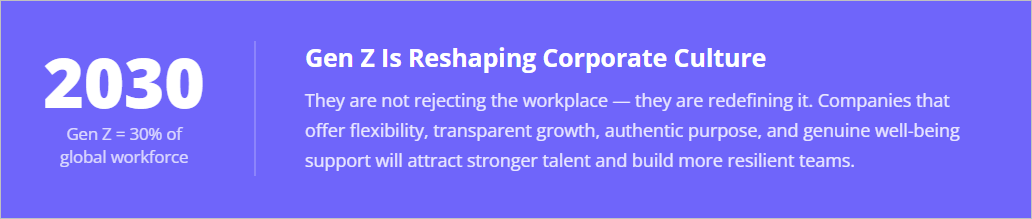
Flexibility, visible appreciation, purpose, growth, mental health, transparency, and technology are long-term expectations. Companies that adapt thoughtfully will attract better talent, improve retention, and build stronger teams for the future.