

Planning Diwali gifts for your clients, partners, or employees?
We’ll help you choose Diwali gifts that fit your budget and brand—quick, simple, and hassle-free. Just reach out to our team and we’ll take care of the rest.
 4.8 out of 5 ★★★★★ by 1100+ brands
 Generation Z includes people born between 1997 and 2012. They are becoming a major part of the workforce and the consumer market. By 2025, they made up nearly 20 to 30% of the global workforce.
This generation grew up with the internet, smartphones, and social media. They think differently about work, money, and life. They care about purpose, balance, and real value. At the same time, they face high financial pressure, mental stress, and uncertainty about the future.
In this article, you will see clear and important statistics that explain how Gen Z thinks, behaves, spends, and works. These numbers will help you understand what drives this generation and how they make decisions.
All the data shared in this article comes from real research reports and trusted studies. The sources are listed below for reference.
Key Gen Z Statistics At a Glance:
- Gen Z makes up 20 to 30% of the global workforce, showing strong economic influence.
- 83% value higher education, but 48% are unsure if they can afford it.
- Around 48% are already working, while 35% are still studying, balancing income and learning.
- Nearly 48% feel financially insecure, which affects daily decisions and future plans.
- 61% face financial anxiety, mainly due to high living costs and job uncertainty.
- 42% have considered leaving their job recently, showing high job switching intent.
- A strong 89% say purpose at work improves satisfaction and well being.
- 98% use social media regularly, spending hours online every day.
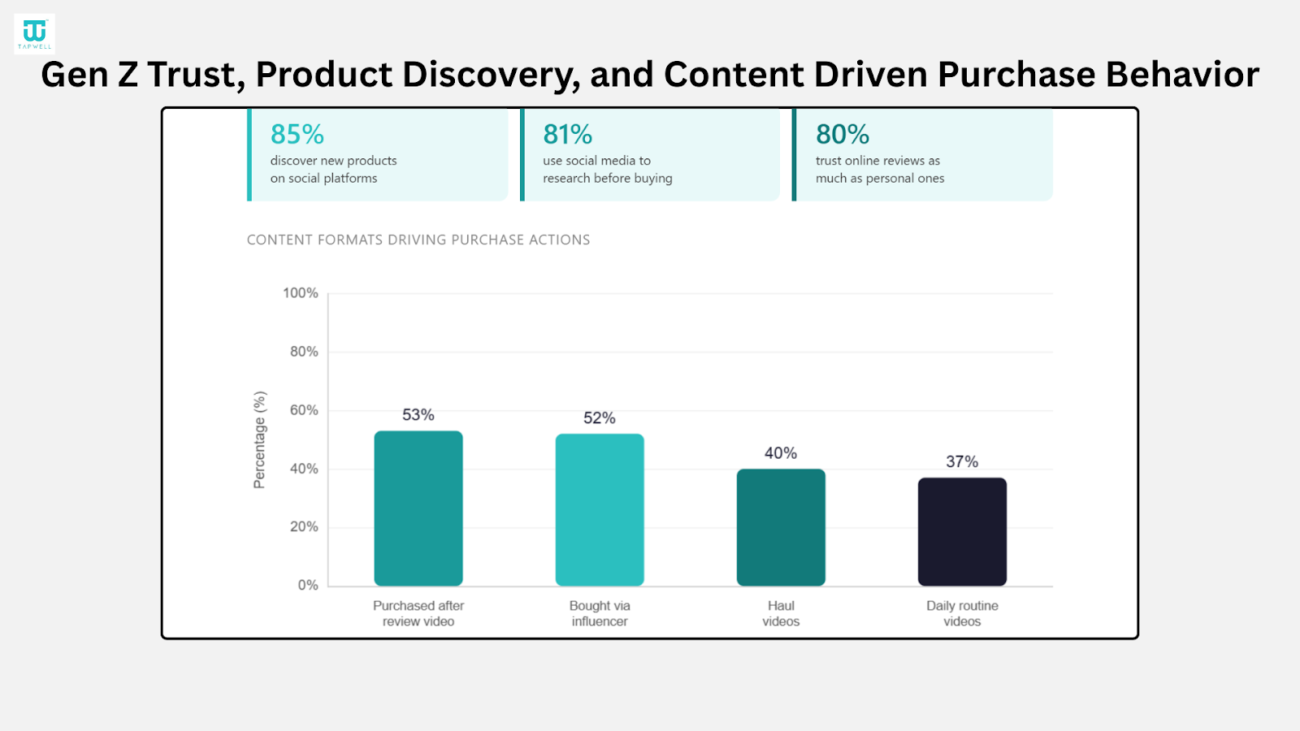
- 85% discover products on social media, and many rely on it for research before buying.
- About 40% report mental health challenges, showing rising stress levels in this generation.
Gen Z Education and Financial Reality
Gen Z is at a stage where they balance education, work, and money decisions at the same time. Many are still studying while also earning, managing expenses, and planning for the future. Their approach reflects both ambition and caution as they deal with rising costs, limited savings, and the need to stay financially stable.
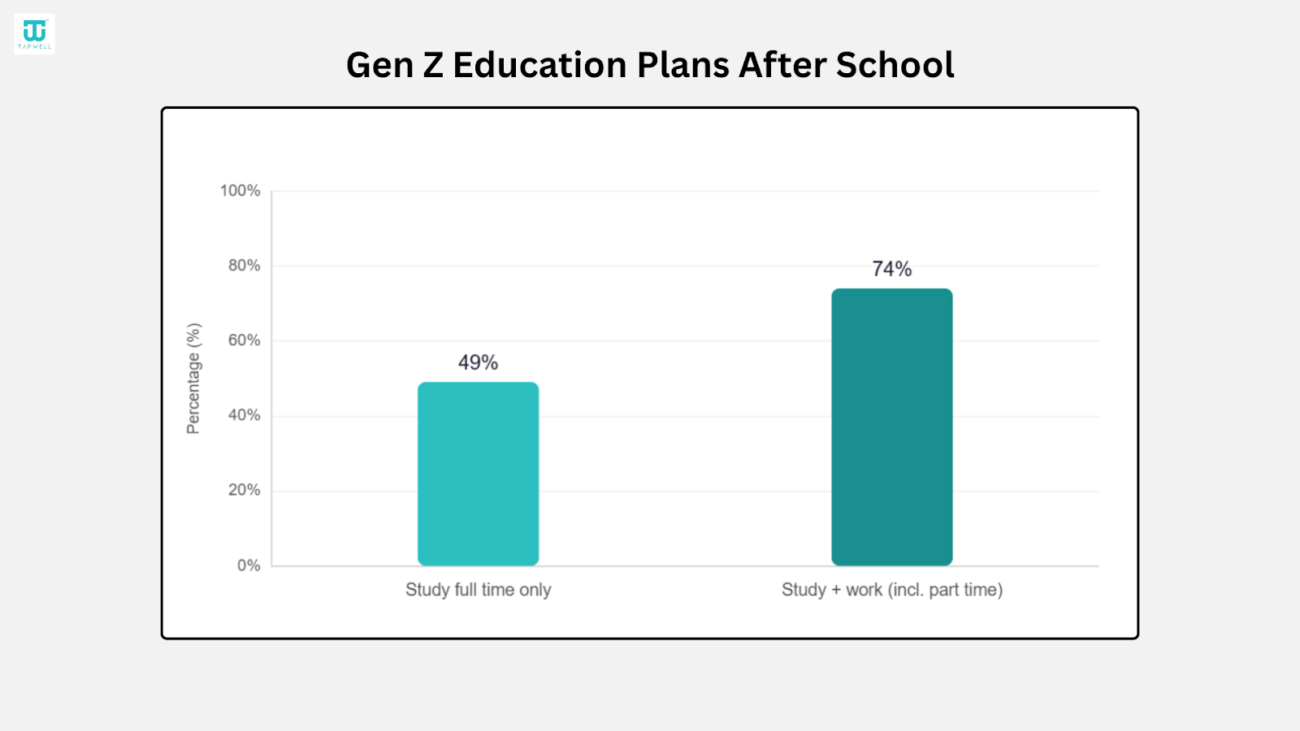
- 49% of Gen Z teens plan to study full time after school, and this increases to 74% when part time study with work is included, which remains lower than Millennials.
- 83% consider higher education important. At the same time, 48% are unsure if they can afford it, which reflects concern about rising costs.
- Close to 48% of Gen Z are already part of the workforce through jobs or self employment, while 35% continue their education.
- Only about 39.6% say they can save money for long term goals without difficulty, which shows limits in early financial stability.
- Nearly 48% say they do not feel financially secure, which influences their day to day decisions and future plans.
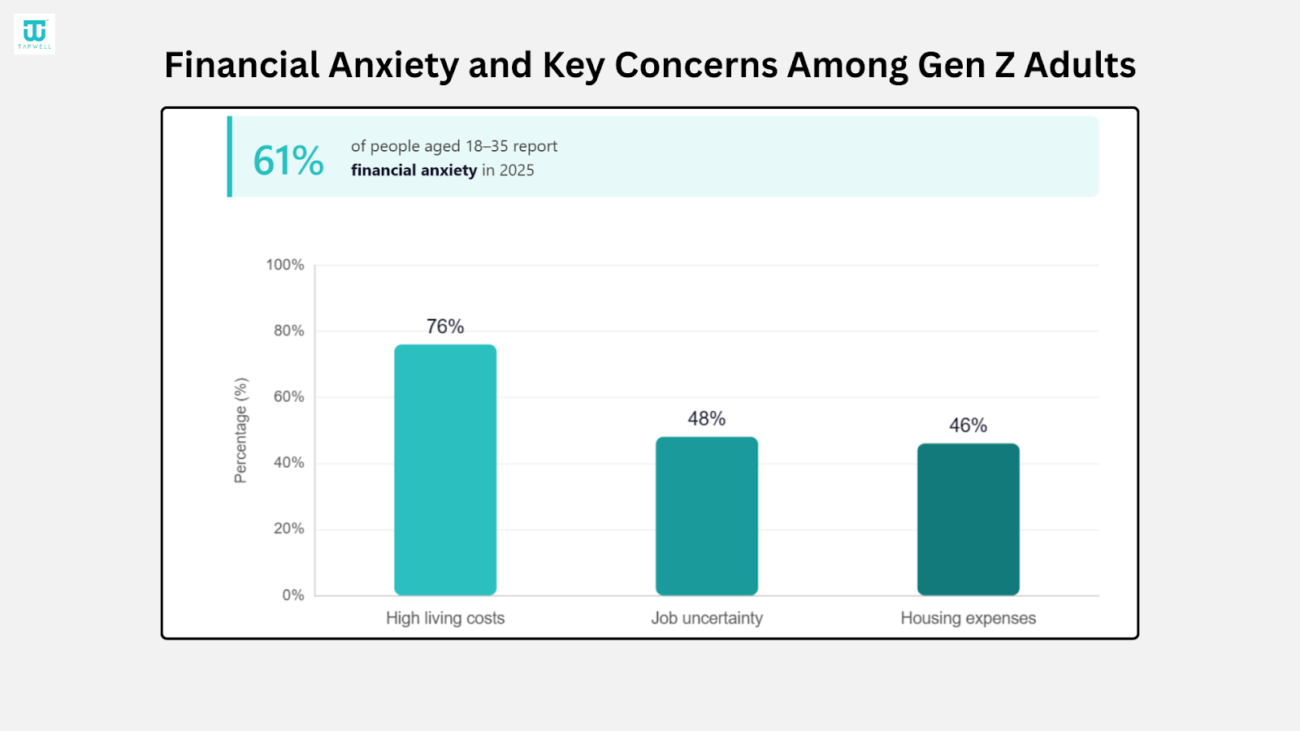
- In 2025, 61% of people aged 18 to 35 report financial anxiety. The main reasons include high living costs (76%), job uncertainty (48%), and housing expenses (46%).
- 41% say extra income sources have improved their finances, while 31% treat building a side hustle as a top priority.
- About 57% of people under 30 have taken loans to learn new skills and improve career opportunities.
Gen Z Work and Career Trends
Gen Z is entering the workforce with different expectations from previous generations. They look for stability, growth, and flexibility at the same time. Work is not only about income for them. It also connects with learning, purpose, and overall quality of life.
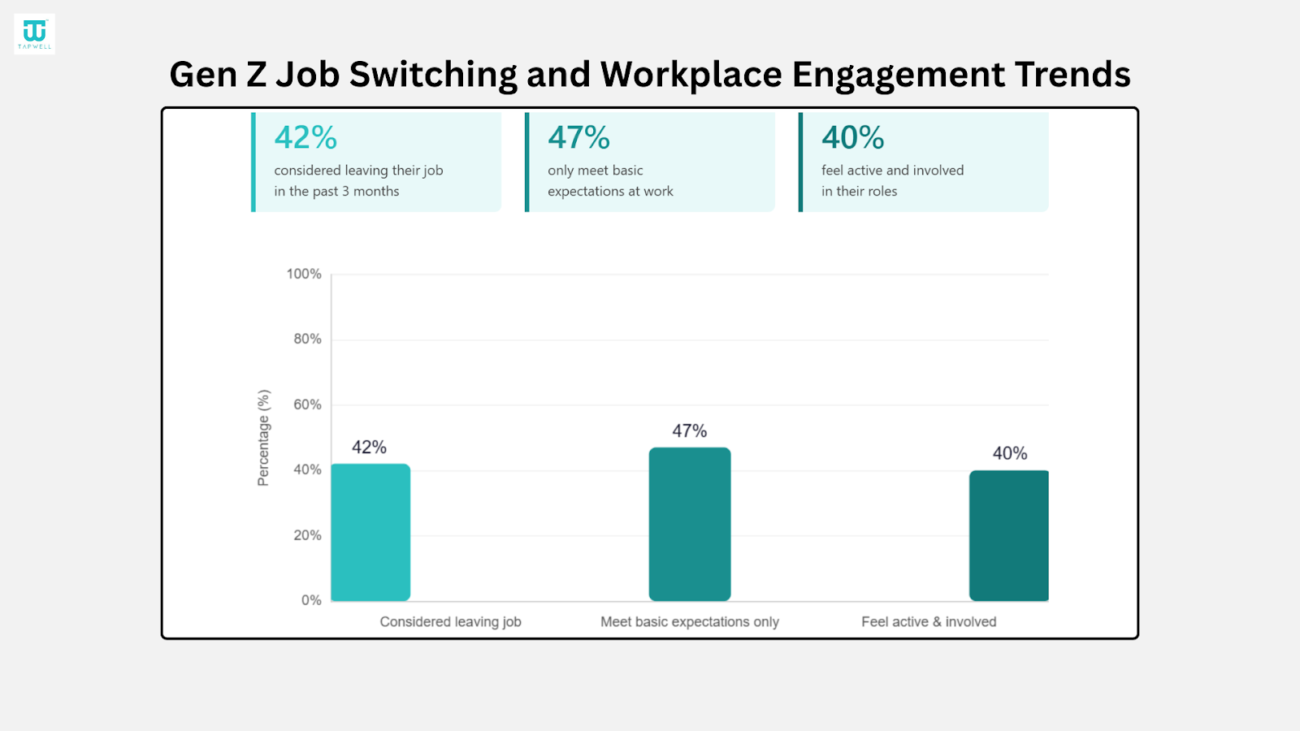
- 42% of Gen Z have considered leaving their job within the past three months, showing a higher tendency to switch roles compared to older generations.
- Many do not feel fully engaged at work, with 47% saying they only meet basic expectations, while 40% report feeling active and involved in their roles.
Companies are solving this using better tools and strategies. Explore employee engagement tools that improve workplace experience.
- Career growth plays an important role, as 32% rank advancement opportunities among their top job selection factors.
- 21% look for stronger connections with coworkers, which highlights the importance of team culture.
- Only 6% aim for leadership positions as their main career goal, which shows a shift away from traditional success paths.
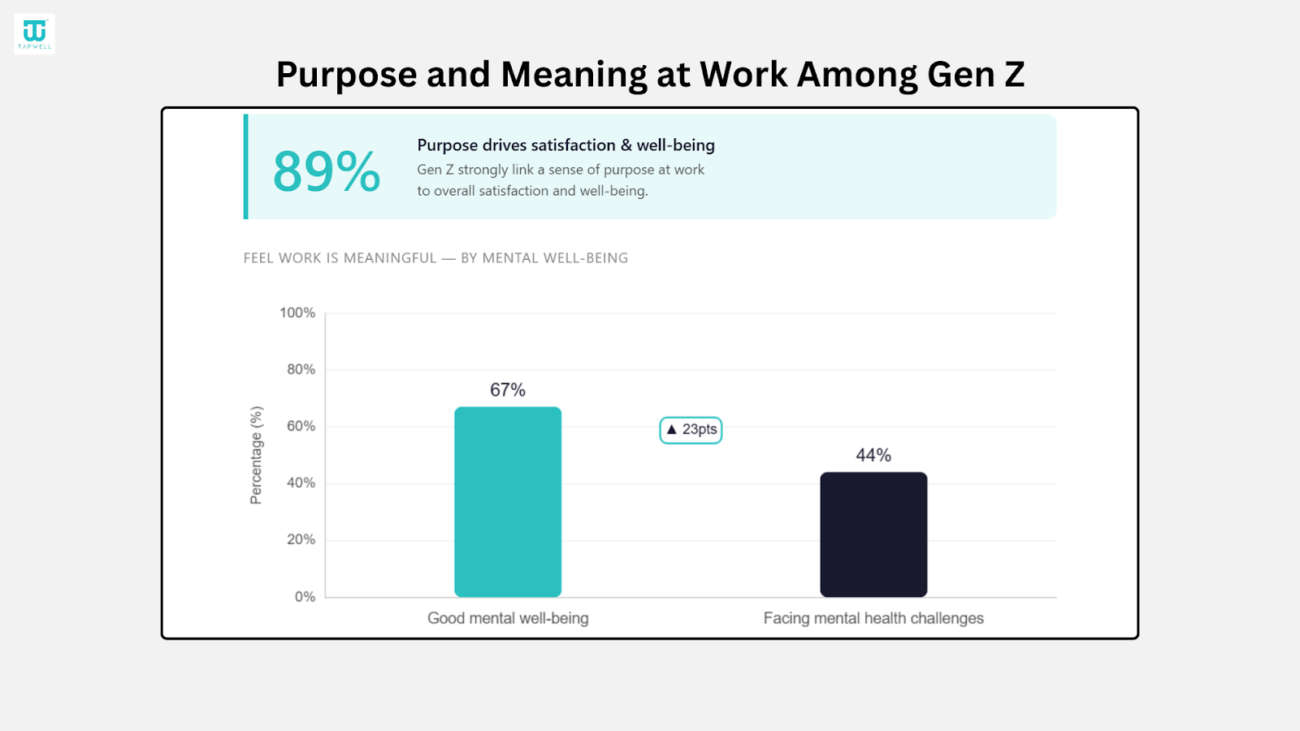
- A strong sense of purpose is important at work, with 89% linking it to satisfaction and overall well-being.
- 67% of Gen Z with good mental well-being feel their work is meaningful, compared to 44% among those facing mental health challenges.
- 74% expect generative AI to change how they work within the next year, showing awareness of rapid technological shifts.
- Frequent use of AI tools supports productivity, as 80% say it helps save time and improves work life balance.
- Job security remains a concern, with 60% believing automation could replace jobs, rising to 78% among active AI users.
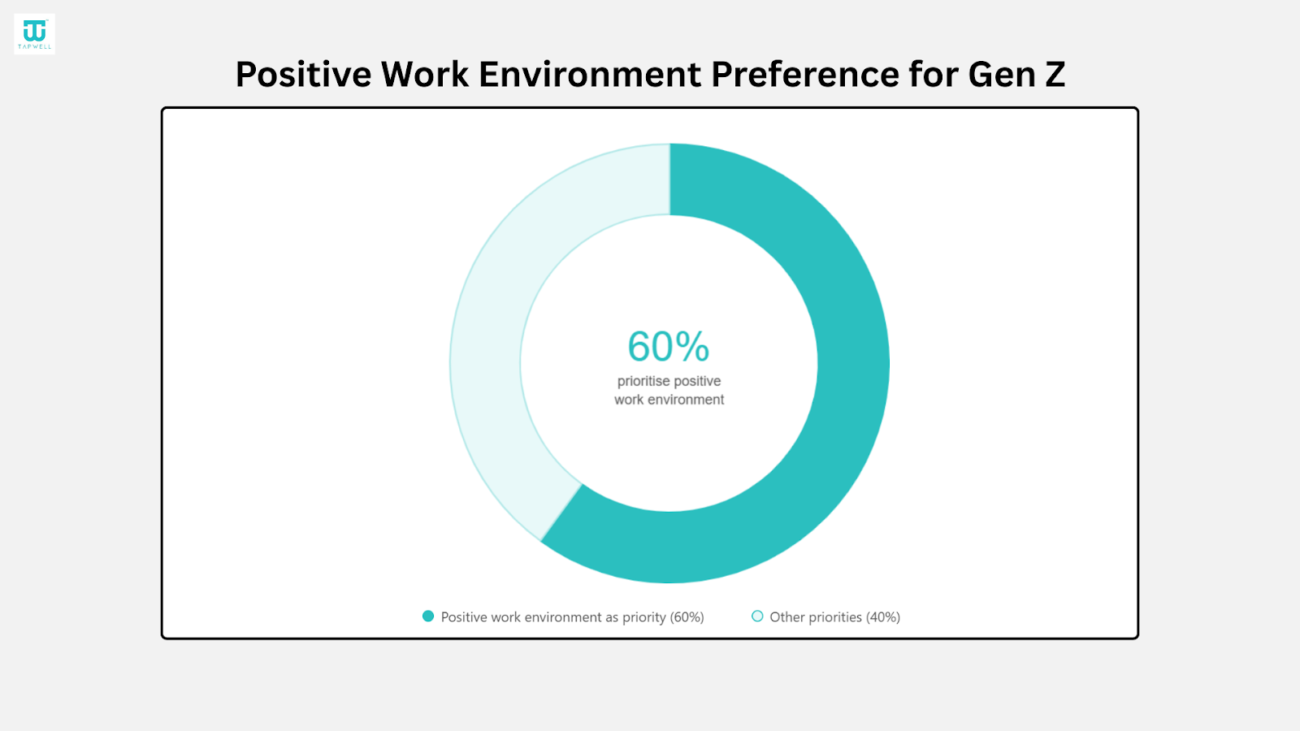
- Pay remains the top priority when choosing a job, but 60% also focus on a positive and engaging work environment.
- Flexible work matters to many, with 17% preferring roles that offer hybrid or remote options.
Gen Z Social Media and Digital Behaviour
Gen Z spends a large part of their time online. They use digital platforms for communication, content, shopping, and information. Their habits show a strong connection with mobile devices, short-form content, and social-driven discovery.
- 98% of Gen Z aged 18 to 24 use at least one social media platform regularly, making it a core part of daily life.
- Time spent online is high, with an average of 6 hours and 40 minutes per day across devices and platforms. More than 80% use YouTube, while 75% are active on Instagram and 69% spend time on TikTok.
- 75% actively track and manage their screen time, which reflects awareness of digital habits.
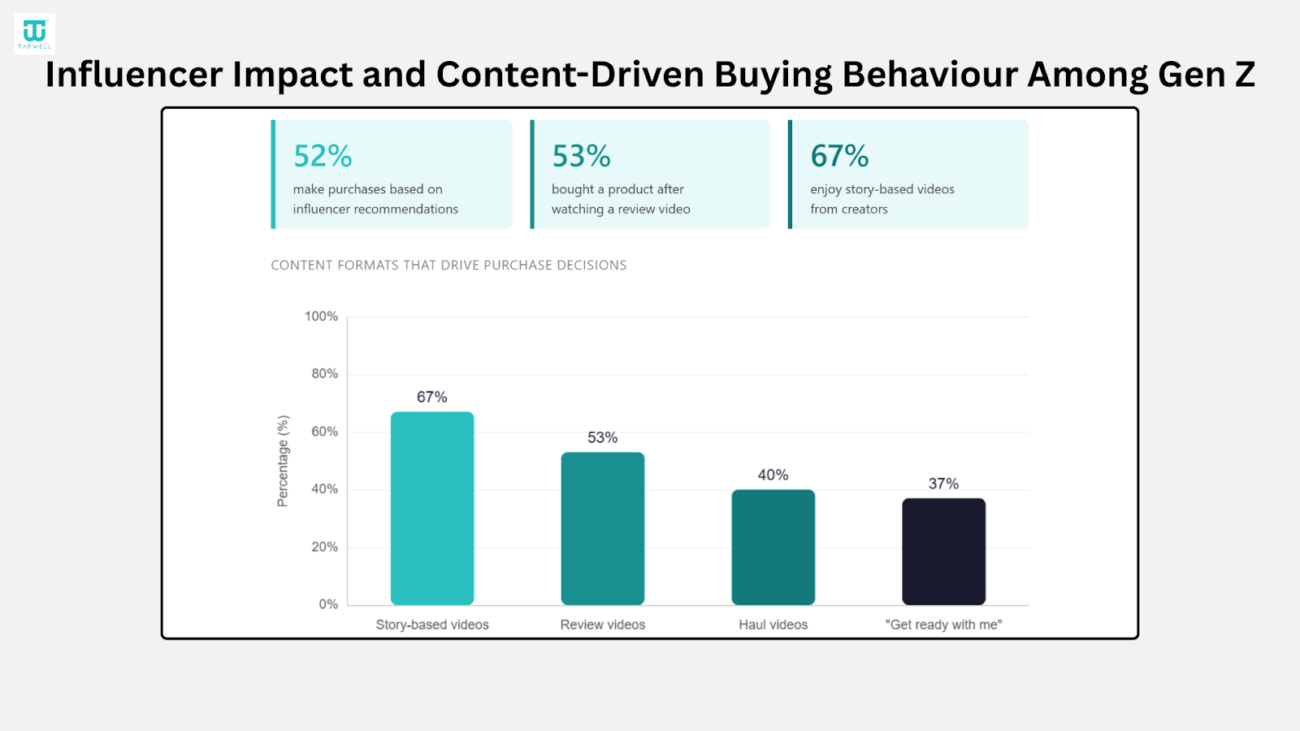
- Content plays a strong role in decision-making, as 67% enjoy story-based videos where creators share personal experiences.
- Review videos influence buying behaviour, with 53% saying they have purchased a product after watching one.
- Other content formats also drive action, including haul videos (40%) and “get ready with me” videos (37%).
- TikTok continued to grow as a search and discovery platform, with a 104% increase in its use for product and brand information since 2020.
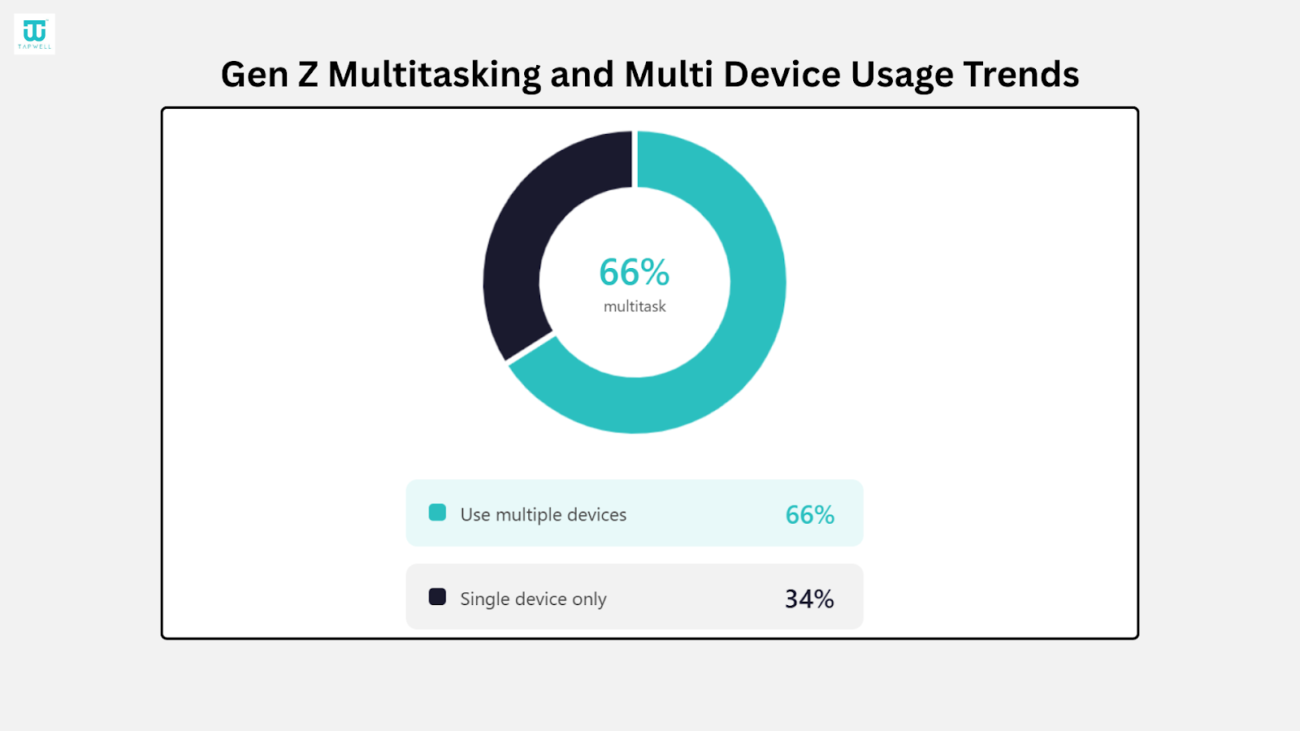
- Among Gen Z 66% use more than one device at the same time, which highlights strong multitasking behavior in digital environments.
Gen Z Spending and Buying Behaviour
Gen Z approaches spending with a mix of caution and curiosity. They compare options, rely on digital sources, and look for real value before making a purchase. Their decisions are shaped by reviews, social influence, and how useful or meaningful a product feels.
- 80% trust online reviews as much as personal recommendations, which makes peer feedback a key part of their buying process.
- Social media plays a direct role in purchases, with 52% buying products through influencers they follow.
- 85% of people discover new products on social platforms, and 81% use them to research before buying—showing how social media now drives buying decisions, including corporate gifting trends.
- Review based content drives action, with 53% making a purchase after watching product reviews.
- Visual content formats also influence buying, including haul videos (40%) and lifestyle based content like daily routine videos (37%).
- Financial limits affect spending habits, as only 39.6% feel comfortable saving for long term goals while managing current expenses.
- Many take extra steps to improve income, with 41% saying side earnings help their financial situation.
Gen Z Values, Beliefs, and Social Priorities
Gen Z places strong importance on social issues, environmental impact, and personal identity. Their views influence how they choose brands, careers, and lifestyles. They often support causes they believe in and expect organizations to take clear action. Nowadays, brands focus on more thoughtful options like eco friendly corporate gifting ideas.
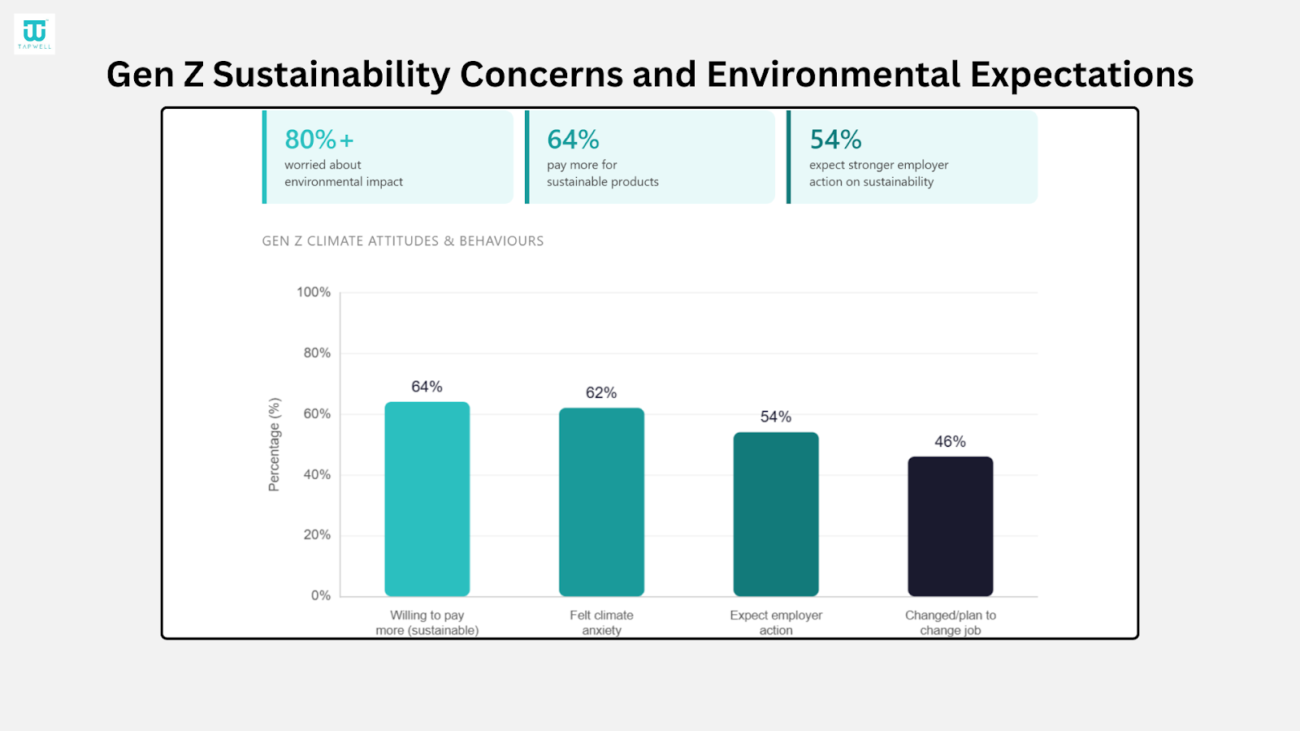
- 64% are willing to pay more for products that are sustainable, which shows a clear preference for responsible consumption.
- Concern about the climate crisis is widespread, as over 80% report feeling worried about environmental impact.
- Emotional response to climate issues is also visible, with 62% saying they felt anxious about it in the past month.
- 46% have already changed or plan to change their job or industry due to climate related concerns.
- 54% expect employers to take stronger action on environmental issues and sustainability practices.
- Social involvement is common, with 32% taking part in activism or social justice activities.
- Among students, participation in activism increases to 40%, with most activity taking place online.
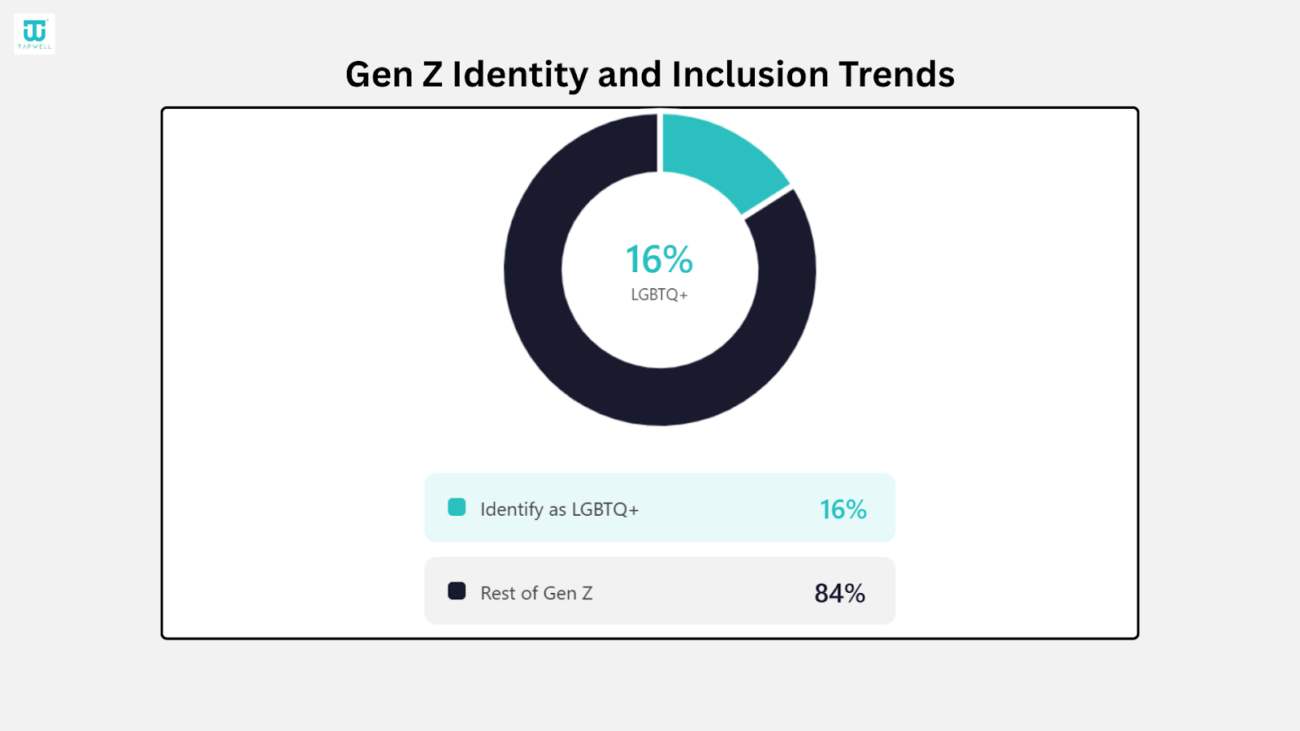
- Identity and inclusion also play a role, as 16% of Gen Z identify as part of the LGBTQ+ community.
Gen Z Mental Health and Lifestyle
Gen Z deals with high levels of stress while managing work, finances, and social pressure. At the same time, they stay open to support, focus on well-being, and try to improve their daily life through small changes and habits. Simple gestures like recognition also make a strong impact. Explore employee appreciation gift ideas to build better engagement.
- 40% of Gen Z report facing mental health challenges, which is lower than the previous year when it stood at 46%.
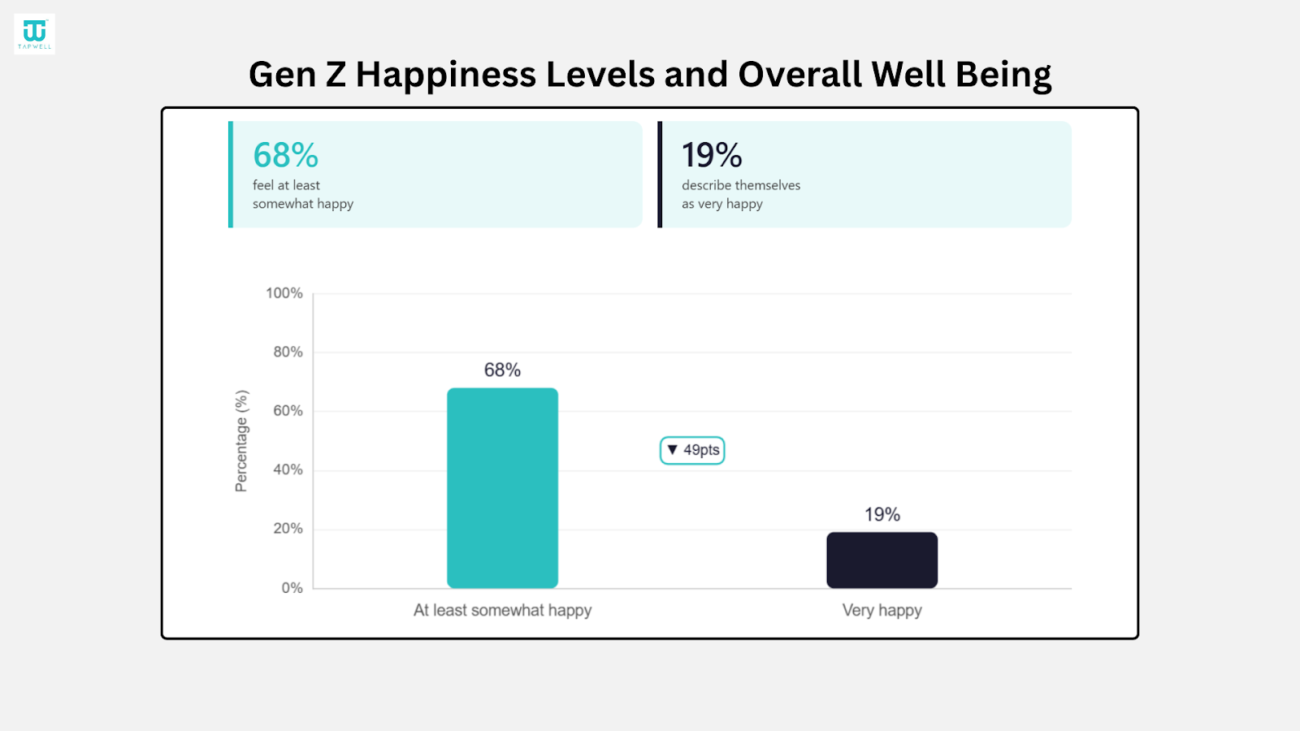
- Only 19% describe themselves as very happy, while 68% say they feel at least somewhat happy in their daily lives.
- Among LGBTQ+ individuals in Gen Z, 12% report being very happy, which is lower compared to the overall group.
- Therapy and mental health support are widely accepted, with 55% having attended therapy and one in four planning to continue long term.
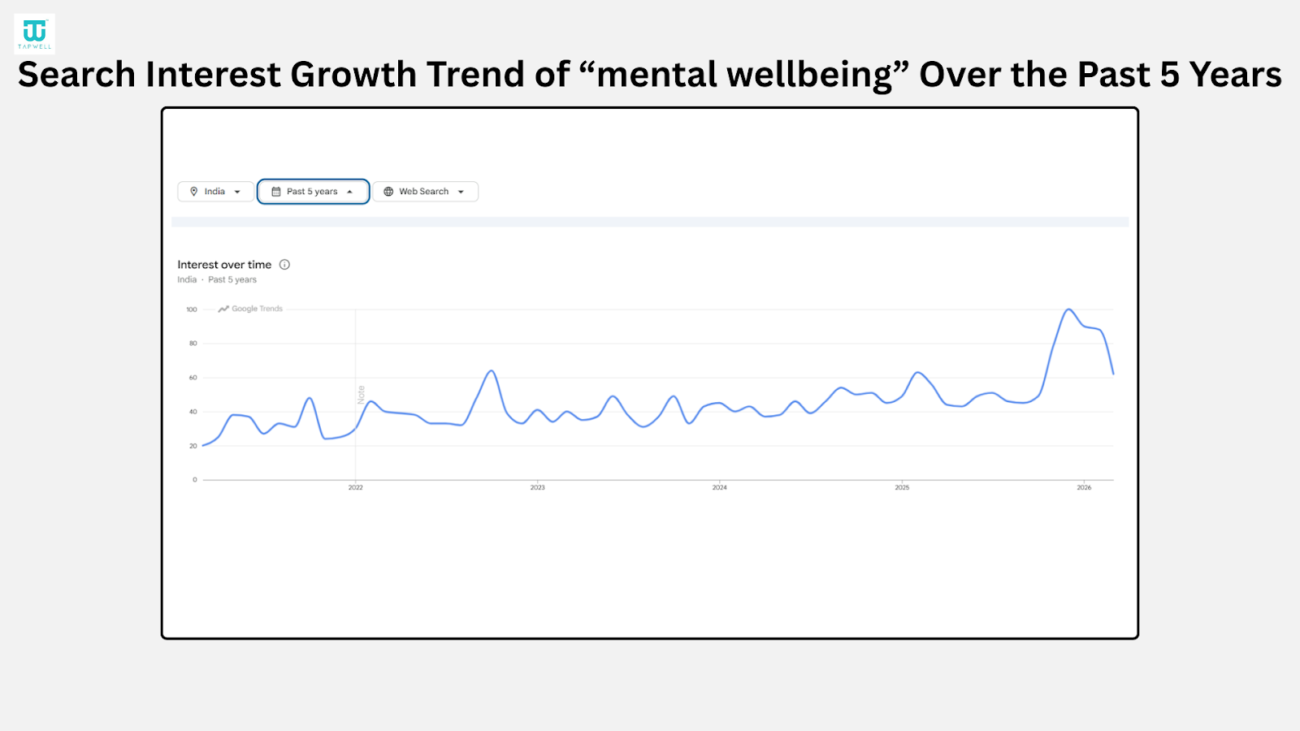
- Search interest in mental wellbeing has increased by 200% over the past five years, showing rising awareness and concern.
- Serious mental health risks are also reported, as 18.8% of high school students have considered suicide, 15.7% have made a plan, and 8.9% have attempted it.
- A smaller group, 2.5%, have made attempts that required medical treatment.
- Life milestones are also changing, with 16% having children and 10% being married, which shows a delay in traditional life decisions.
- Many remain hopeful about personal progress, as 48% expect their financial situation to improve within the next year.
- Views on the broader environment are more cautious, with 32% expecting economic conditions to improve and 28% expecting better social or political conditions.
Final Words
Gen Z is growing fast in both the workforce and the consumer market. Their choices come from digital habits, money concerns, and clear personal priorities. They make informed decisions and choose what feels useful in daily life.
They expect better experiences from brands and employers. Simple and thoughtful ideas work better than generic ones. Easy use, clear value, and personal touch matter at every step.
For companies, this is a chance to improve how they connect with this generation. You can explore corporate gift ideas that match modern teams and their needs.
Tapwell stands out as the best corporate gifting partner for Gen Z. Their gifts are practical, thoughtful, and well designed. When your gifting matches their lifestyle and values, it builds stronger connections and better engagement.
Data Sources
- https://www.forbes.com/sites/tessbrigham/2025/02/18/the-new-money-mindset-gen-z-is-treating-finances-like-self-care/
- https://www.theupandup.us/p/gen-z-weighing-the-cost-of-college-gallup-data
- https://news.gallup.com/opinion/gallup/509906/majority-gen-consider-college-education-important.aspx
- https://www.storyboard18.com/how-it-works/credit-with-a-purpose-how-genz-is-transforming-borrowing-in-2025-56975.htm
- https://ijpsl.in/wp-content/uploads/2022/01/Eco-Anxiety-Impact-on-Generation-Zs-Mental-Health-and-the-Contemporary-Significance-of-Environmental-Awareness-and-Education-merged.pdf
- https://www.gwi.com/reports/gen-z
- https://www.deloitte.com/global/en/issues/work/genz-millennial-survey.html
- https://unitedwaynca.org/blog/gen-z-activism-survey/
- https://thrivingcenterofpsych.com/blog/gen-z-millennial-therapy-statistics/
- https://www.cdc.gov/mmwr/volumes/69/su/pdfs/su6901-H.pdf
- https://pro.morningconsult.com/analyst-reports/gen-z-engagement-social-media-entertainment-tech
- https://sago.com/en/resources/insights/digital-detox-how-different-generations-navigate-social-media-breaks/
- https://insights.klarna.com/shopping-pulse/
- https://www.semrush.com/news/370819-revenge-quitting-in-2025-media-hype-or-a-workforce-revolution/
- https://www.surveymonkey.com/curiosity/cnbc-workforce-survey-april-2024/
- https://www.investopedia.com/generation-z-gen-z-definition-5218554
- https://www.sganalytics.com/blog/what-is-generation-z-and-gen-z-hiring-trends/
- https://media.market.us/gen-z-statistics/
- https://www.britannica.com/topic/Generation-Z
- https://amberstudent.com/blog/post/how-gen-z-is-shaping-the-future-of-technology
- https://www.telecoming.com/blog/understanding-gen-z-the-digital-natives/