

Planning Diwali gifts for your clients, partners, or employees?
We’ll help you choose Diwali gifts that fit your budget and brand—quick, simple, and hassle-free. Just reach out to our team and we’ll take care of the rest.
 4.8 out of 5 ★★★★★ by 1100+ brands
 Many organizations look at remote onboarding as just sharing logins, sending a few emails, and doing a welcome call. Even if employees are working from home, it is important to create a structured and emotional onboarding experience.
The first week sets the tone for productivity, confidence, culture fit, and long-term engagement. Remote employees do not have the same office energy or informal support, so every touchpoint needs to be thoughtful and clear.
We at TapWell have worked with 1000+ organizations to develop employee welcome kits and onboarding kits. We have seen how a well-planned onboarding system changes employee motivation and belonging from day one. This guide is based on our experience working with HR teams across industries and insights from employees at leading global companies.
We will break down the remote employee onboarding process step by step and share a practical checklist you can use immediately.
📥 Download the Free Remote Onboarding Checklist:

Get the full checklist in PDF or Word format to use and customize for your HR team.
(Keep it handy to structure your onboarding plan and improve remote employee experience.)
Why Remote Onboarding Matters More Than Ever
While remote work gives teams flexibility and access to global talent, it also creates gaps in connection, clarity, and culture if onboarding is not structured. Let us look at why remote onboarding matters more today than ever and how it directly impacts employee performance, confidence, and long term retention.
Reduced ramp-up time and stronger productivity
A clear remote onboarding plan helps new employees understand their role, tools, and priorities from day one. When there is a checklist, scheduled learning, and access to the right documents, new hires start producing meaningful work faster. Most companies that do not standardize onboarding see scattered learning and slow progress in the first month.
At TapWell, we have seen teams who share structured onboarding kits and role guides cut training time by almost half, because employees know exactly what to learn and how to do it. Small clarity upfront saves weeks of confusion later and builds early momentum.
Helps build culture in distributed teams
Culture does not happen automatically in remote teams. With no office environment, employees cannot absorb values through daily interactions. Remote onboarding is the time to build culture deliberately through welcome calls, buddy systems, leadership messages, and physical welcome kits that build emotional belonging.
A strong culture plan helps people feel included and aligned even if they have never visited the office. We see companies send handbooks, culture cards, and founder notes inside onboarding kits. These small steps create shared identity and motivation, something new employees would otherwise struggle to feel through only screens and emails.
Creates ownership and clarity from day one
When remote onboarding is planned well, new employees get clarity on goals, workflows, responsibilities, and expectations early. They know who to reach out to, what success looks like, and what tools support their work.
This creates ownership instead of waiting for instructions. Great onboarding gives employees a 30-60-90 day plan, weekly check-ins, and role resources. Many HR leaders tell us this is the most underrated part of onboarding. Employees who know what is expected show initiative faster, ask better questions, and avoid rework. Clear structure builds confidence and confidence turns into performance.
Reduces early employee churn
Most early resignations happen when people feel confused, disconnected, or unsupported. A strong onboarding experience prevents this by helping hires feel valued and confident.
One mid-size tech product company in Bangalore shared with our team that they saw a drop in 90-day attrition from 18 percent to under 9 percent after they introduced structured onboarding calls, mentor assignment, and personalized welcome kits for remote employees.
Their HR team also shared that employees who received onboarding kits and clear role plans gave higher satisfaction scores during first-month feedback. A stable start helps people stay longer and grow with the company.
Remote Employee Onboarding Process
If you want your remote employees to feel confident, connected, and productive from day one, your onboarding needs more than welcome calls and tool access.
It needs a structured plan that builds clarity, culture, and support step by step. Here are the core elements of a high-impact remote onboarding program.
Pre-boarding Setup (before day one)
The onboarding experience should begin before the first working day. This is when you build excitement, remove doubts, and prepare all access so the employee feels ready. Make sure devices, tools, and accounts are set up and internal teams are informed about the new hire.
Share a welcome email, outline of the first week, and important documents. You can also get your employee welcome kit ready so the employee receives it before or on day one.
Here’s how employee celebrate their welcome kit by showcasing on social media:
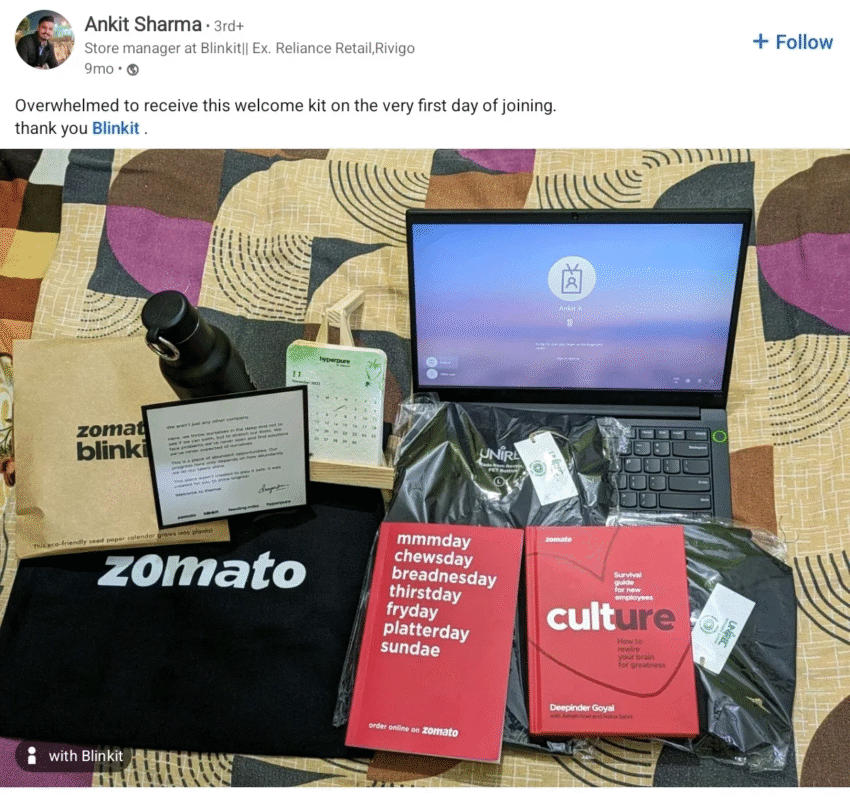
Another one:

At TapWell, we prepare and ship personalized onboarding kits for companies so remote employees feel valued even before they log in for the first time.
First-Day Experience
The first day sets the tone for the entire journey. It should feel organized, warm, and welcoming. Start with a friendly introduction call and a clear walkthrough of how the day will go. Introduce the employee to their manager and team so they feel included.
Share the company story, values, and mission in a simple, human way. Provide access to essential tools and walkthrough videos to avoid early frustration.
End the day with a short check in to solve any challenges and make sure they feel supported and confident about the days ahead.
First-Week Structure
The first week should help the employee settle in, understand workflows, and build early momentum. Give a structured learning agenda and daily check-ins to avoid feeling lost. Use short tasks and internal shadowing to build confidence. Key elements to include are:
- Role responsibilities explained with clarity
- Meetings with cross-functional teammates
- Tool training and workflow introduction
- Buddy or mentor assigned for support
- Small goals to build confidence
Make sure they feel connected to the culture through informal virtual meets or welcome calls. The more guided this week feels, the faster they adapt.
First-30 Days Plan
The first month should give remote employees a clear runway to become productive and confident in their role. Set realistic goals for the first 30 days and offer weekly reviews to track progress. Provide internal learning content, access to project documentation, and one on one check ins. This period should focus on building clarity, establishing communication rhythm, and aligning expectations. Include:
- Defined performance goals
- Weekly manager sync calls
- Feedback and support loop
- Involvement in team meetings and project discussions
The right 30 day plan builds trust, comfort, and ownership so the employee performs well and feels connected long term.
Tools & Resources For Smooth Remote Onboarding
Remote onboarding works best when employees get the right tools to learn, connect, and work without friction. The goal is to remove confusion and make information, communication, and support easy to access from day one. Below are core tools and resources companies should plan for.
Communication Tools
Clear and fast communication helps remote employees feel connected and supported. Team chats, video calls, and quick check ins remove confusion and build trust from day one. These tools also help new hires learn company tone and collaboration practices naturally.
Examples: Slack, Microsoft Teams, Zoom, Google Meet
Project and Task Management Tools
New employees should always know what to work on, who to collaborate with, and when tasks are due. Project tools provide clarity, structure, and visibility into workflows, which reduces mistakes and speeds up learning.
Examples: Asana, Notion, Trello, Monday.com, Jira
Knowledge Hub or Document Repository
Remote hires need easy access to company policies, SOPs, handbooks, onboarding guides, and role training documents. A central knowledge base reduces back and forth and encourages self learning, which speeds up ramp up time.
Examples: Notion, Confluence, Google Drive, SharePoint
Learning and Training Platforms
A structured learning space helps new employees understand tools, processes, and role expectations at their own pace. It also standardizes onboarding across teams and improves retention of information.
Examples: LMS systems, TalentLMS, internal training portals, Loom video library
IT and Device Setup
Remote onboarding must ensure secure and smooth access to devices, tools, and accounts. A proper IT setup avoids delays, creates confidence, and prevents security risks for the organization.
Examples: SSO tools, password managers, device shipment checklist, support ticket system
What To Include In A Remote Onboarding Welcome Kit
As we have seen, a welcome kit is an important part of making remote employees feel valued and connected from the very beginning. So planning it with care matters. A well curated kit brings excitement, pride, and a sense of belonging on day one. Here are some meaningful items you can include:
- Company branded notebook
- Mug or water bottle
- T shirt or hoodie
- Desk plant
- Laptop sleeve
- Mouse pad
- Employee handbook or culture booklet
- Pen set
- Wellness items
- Chocolate or snack box
- Personalized welcome card
- Founder note
- Employee ID card or badge card
We understand that every company has a unique culture and budget. If you are confused about what fits your brand, our team can help. We offer custom onboarding kits with 4000 plus products across 30 plus categories and everything can be personalized with your branding. So you can build a thoughtful experience that makes remote employees feel part of the team from day one.
Remote Onboarding Is a Culture Investment
Remote employees are as much a part of your culture as those sitting in an office. Onboarding them properly is not just a process, it is a signal of how you value your people.
Everything matters here including communication, clarity, training, and thoughtful physical touchpoints that build emotions. Remote onboarding is a long term culture investment, not a checklist task. You should definitely focus on creating a structured and warm experience that builds belonging from day one.
We at TapWell are one of the leading corporate gifting companies in India with 1000 plus clients. We have worked with top brands across India and delivered over 10 lac gifts. Our customizable onboarding kits help companies create memorable first days and stronger team culture.