


Planning Diwali gifts for your clients, partners, or employees?
We’ll help you choose Diwali gifts that fit your budget and brand—quick, simple, and hassle-free. Just reach out to our team and we’ll take care of the rest.
 4.8 out of 5 ★★★★★ by 1100+ brands
 Workplace wellness has become an important part of employee health, satisfaction, and workplace performance.
As organizations face growing concerns about mental health, stress, work-life balance, and financial well-being, wellness programs are becoming more important.
These workplace wellness statistics show what employees need, how organizations are responding, and where support gaps remain.
The data also covers wellness program access, employer support, workplace stress, and the global workplace wellness market. For reference, we have added the data sources at the end.
Workplace Wellness Statistics at a Glance
- In 2024, 9.8% of employed workers worldwide had access to workplace wellness programs, covering about 349 million people.
- 47% of workers said their mental health and well-being negatively affect their work performance.
- 69% of workers without access to mental health resources said they would be interested in having them.
- 49% of workers said their employer offered a health and wellness program in 2025, up from 45% in 2024.
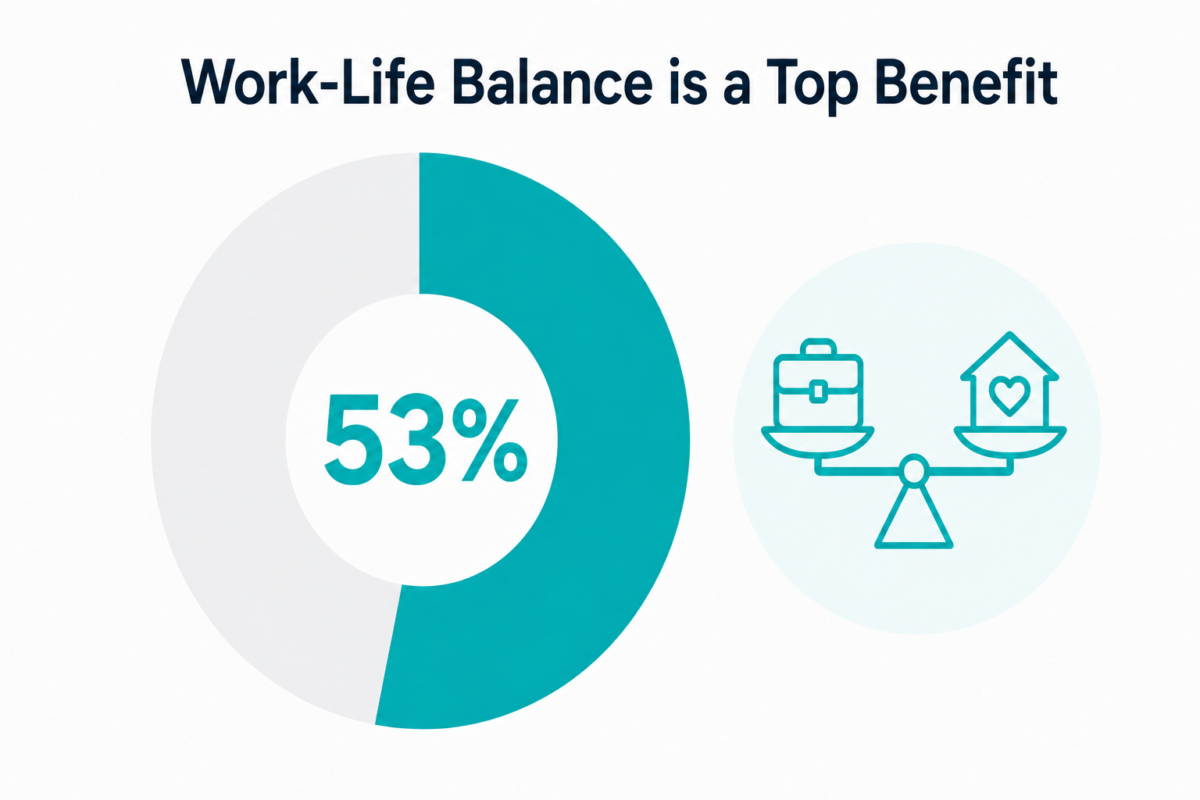
- 53% of workers said work-life balance was one of the top three benefits they valued most.
- 64% of organizations reported stress-related absence.
- 71% of organizations provide counseling for all employees.
- In 2025, 44% of workers rated their employer excellent or very good at improving workplace wellbeing.
- The global workplace wellness market reached $53.3 billion in 2024 and is projected to reach $59.3 billion by 2029.
- Workplace wellness coverage was 46.08% in North America compared with 4.95% in Asia Pacific in 2024.
Workplace Wellbeing
Workplace wellbeing reflects how employees feel about their jobs, health, relationships, and overall work experience. These figures show that concerns about wellbeing remain significant, while job satisfaction and employees’ sense of value continue to influence the workplace experience.
- In 2024, workers rated their concern about workplace wellbeing at an average of 5.5 out of 10, while 17% reported great concern about their workplace wellbeing.
- In 2025, workers rated their concern about workplace, physical, and mental wellbeing at about 5.8 out of 10.
- 56% of workers were very or extremely satisfied with their current job.
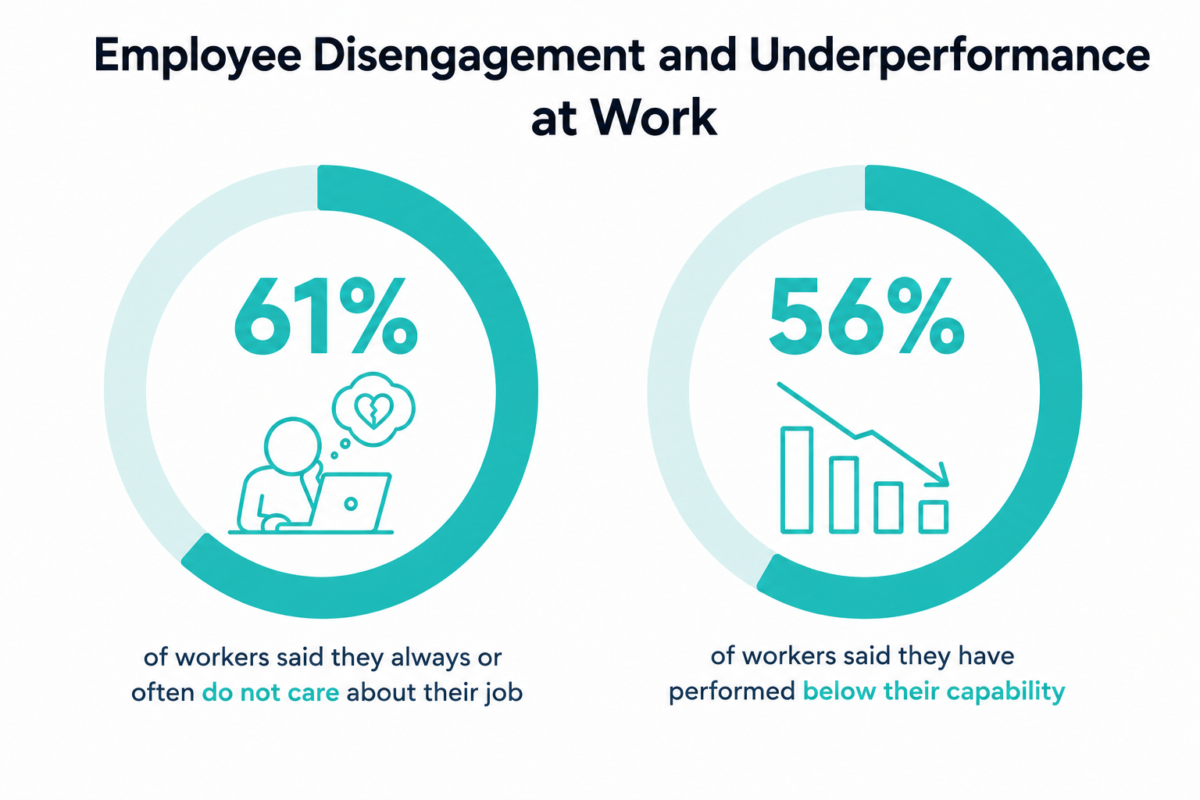
- 61% of workers said they always or often do not care about their job, while 56% said they have performed below their capability.
- 44% of workers rarely or never felt valued for their contributions.
Mental Health and Emotional Wellbeing
Mental health remains a major part of workplace wellness, with many employees reporting concerns that affect their work. The strong demand for mental health resources also points to a gap between employee needs and the support currently available.
- 19% of workers reported great concern about their emotional wellbeing and mental health.
- 47% of workers said their mental health and wellbeing negatively affects their work performance.
- 69% of workers without access to mental health resources said they would be interested in having them.
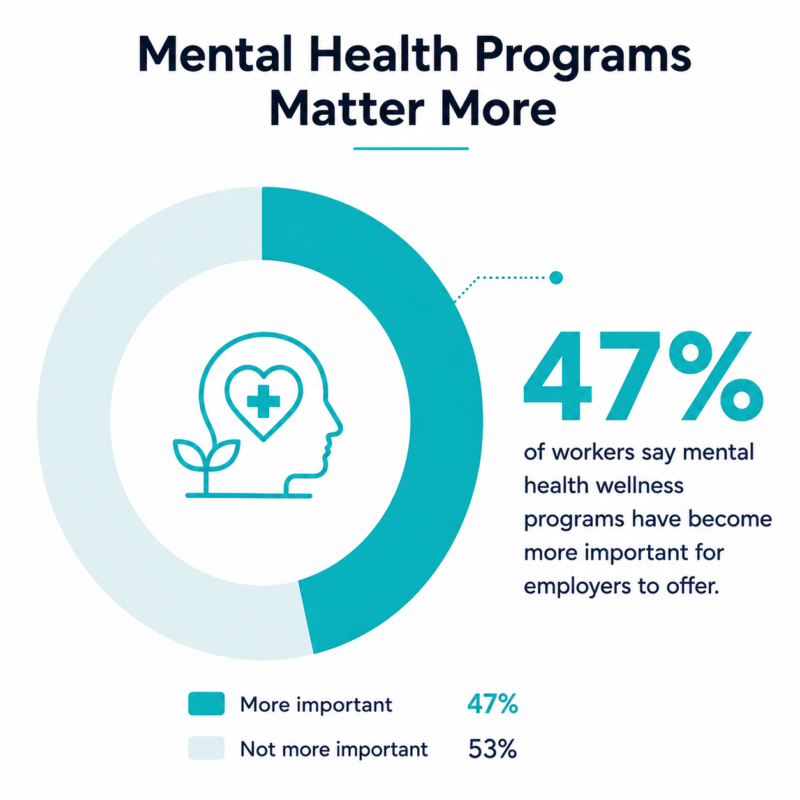
- 47% of workers said mental health wellness programs have become more important for employers to offer.
- 89% of organizations that run wellbeing activities include mental health in their programs.
- 71% of organizations provide counseling for all employees.
- 52% of organizations provide 24/7 access to mental health support and counseling.
Physical Health and Wellness
Physical health programs cover areas such as health promotion, rehabilitation, physiotherapy, screening, and exercise. While many organizations include physical health in their wellness efforts, access to specific services varies considerably across workplaces.
- 18% of workers reported great concern about their physical wellbeing and health.
- 66% of organizations include physical health in their workplace wellbeing activities.
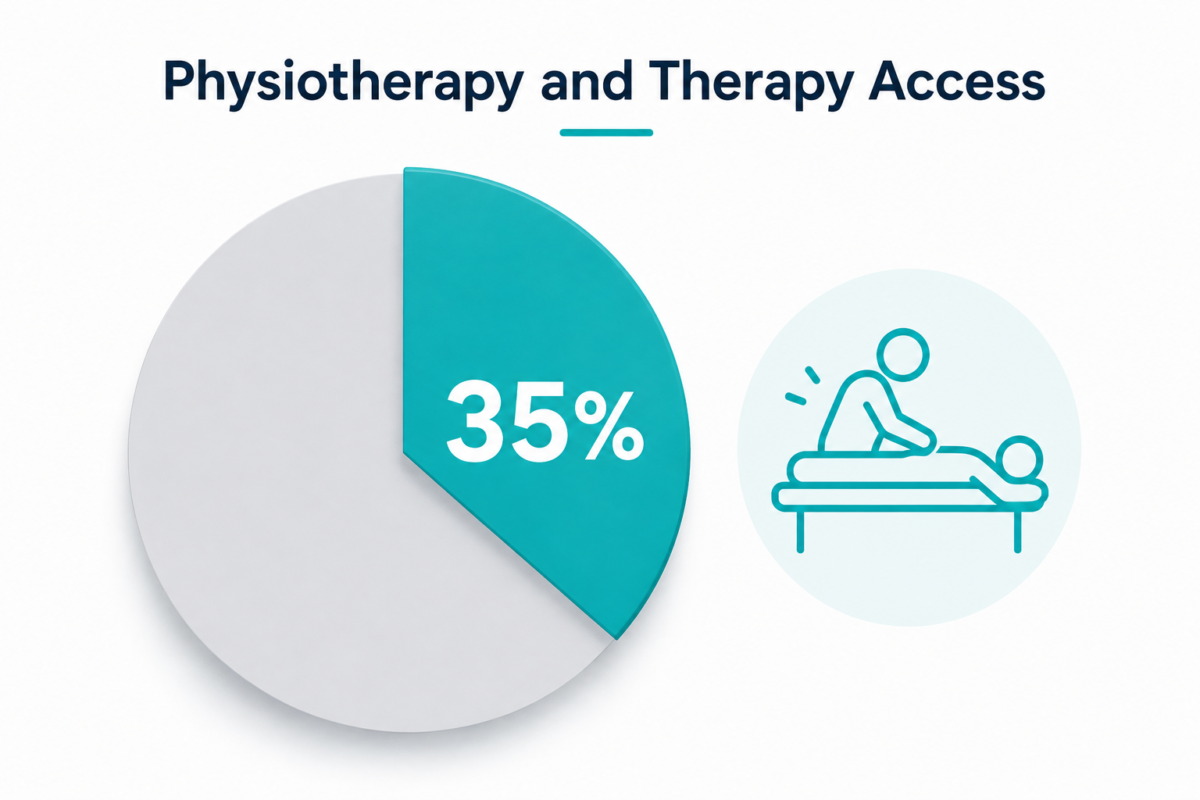
- 35% of organizations provide access to physiotherapy or other therapies for all employees.
- 35% of organizations provide health screening for all employees.
- 23% of organizations offer regular on-site relaxation or exercise classes such as yoga or Pilates.
Workplace Wellness Program Access
Employee access to formal wellness programs remains uneven. Although many large employers provide these programs, global access is still limited. This suggests that workplace wellness has expanded within some organizations but has not become widely available across the global workforce.
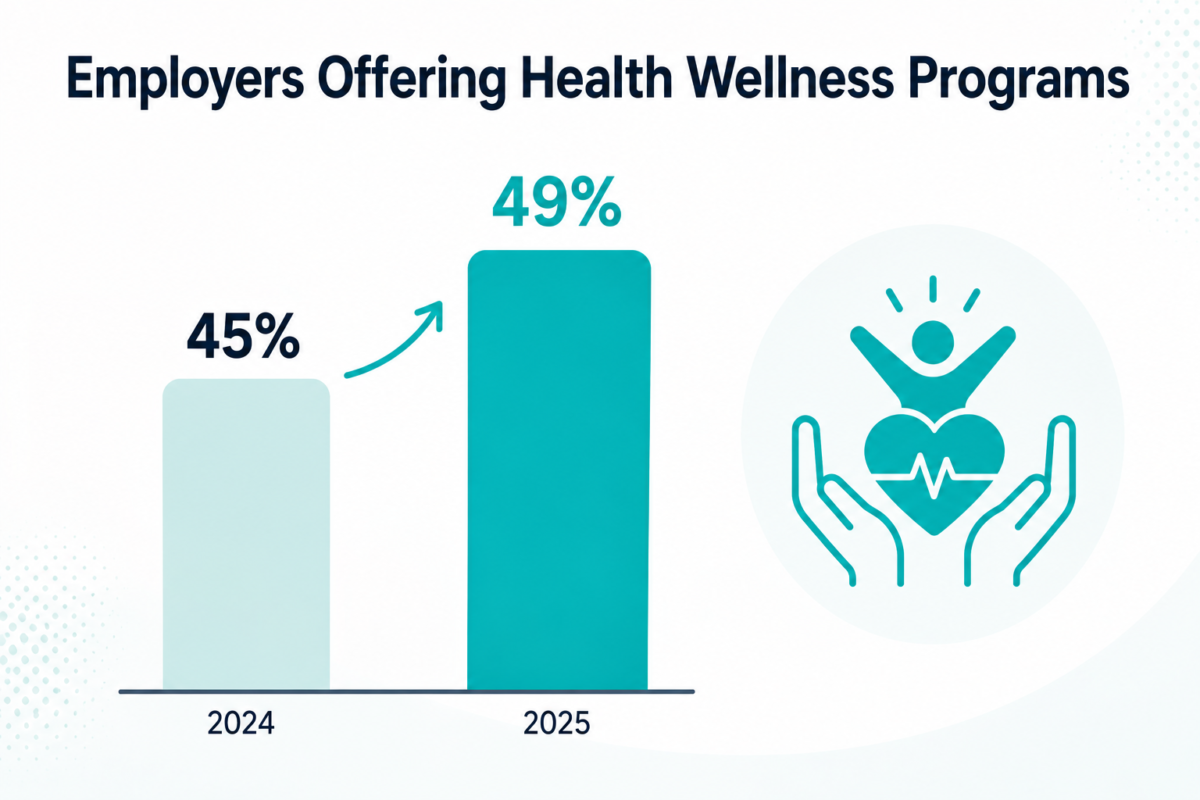
- In 2025, 49% of workers said their employer offered a health wellness program, up from 45% in 2024.
- 36% of workers said their employer offered a financial wellness program.
- 68% of U.S. workers said they did not use the full value of their organization’s wellbeing resources because the programs were too time-consuming, confusing, or difficult to access.
- Nearly 85% of large U.S. employers offer workplace wellness programs, despite rising burnout and mental health needs.
Employee Demand for Wellness Benefits
Employees increasingly value benefits that support their health, flexibility, and personal needs. Interest in mental health resources, health guidance, and flexible work options shows that workers expect wellness programs to address practical needs rather than focus only on traditional benefits.
- 66% of workers without access to a health coach or health care navigator said they would be interested in this support.
- 69% of workers without expanded mental health benefits said they would be interested in benefits such as free counseling with a therapist or coach.
- 53% of workers said work-life balance was one of the top three benefits they valued most, outside of income and compensation.
- 48% of workers valued flexibility in their work schedule, while 28% valued flexibility in their work location.
Work-Life Balance and Flexible Work
Work-life balance plays a major role in how employees assess their workplace experience. Paid time off, flexible schedules, and remote work can give people greater control over their time while helping organizations respond to changing employee expectations.
- 53% of workers in 2025 said work-life balance was one of the top three benefits they valued most.
- 42% of workers were not fully comfortable requesting paid time off because of concerns about workload, staffing, and how managers might view their absence.
- Employers provided an average of 20 paid days off in 2025, up from 19 days in 2024.
- 80% of workers were at least somewhat satisfied with their paid time off benefits.
- 20% of workers worked fully remotely in 2024, compared with 16% in 2023.
- 25% of workers said they would give up 15% of their annual salary in exchange for flexible working hours.
Workplace Stress and Burnout
Work-related stress continues to affect employees and organizations, with stress-related absence remaining common. Flexible work, manager training, and resilience programs are among the approaches organizations use to address workplace stress and create healthier working conditions.
- 64% of organizations reported stress-related absence.
- 61% of organizations taking steps to reduce workplace stress use flexible working or improved work-life balance.
- 43% of organizations use line manager training to help manage workplace stress.
- 37% of organizations said their approach to employee health and wellbeing was still more reactive than proactive.
- Workplace Employee Assistance Program engagement has remained around 5% to 10% since these programs were introduced in the 1980s.
Types of Workplace Wellness Support
Organizations are taking a broader approach to employee wellbeing that extends beyond physical health. Current programs cover relationships, personal development, financial needs, caregiving, reproductive health, menopause, and sleep, reflecting the different factors that shape employees’ daily wellbeing.
| Wellness support area | Share of organizations |
| Good work, including job design and work-life balance | 84% |
| Collective and social relationships | 83% |
| Personal growth, including mentoring and development | 80% |
| Support for working parents or carers | 75% |
| Financial wellbeing | 68% |
| Support for employees caring for an elderly or ill relative | 63% |
| Menopause transition support | 55% |
| Menstrual health support | 45% |
| Sleep hygiene support | 35% |
Management and Leadership
Managers have an important role in creating a supportive workplace because they often handle sensitive employee concerns. Training can help managers recognize mental health issues, respond appropriately, and connect employees with professional support when necessary.
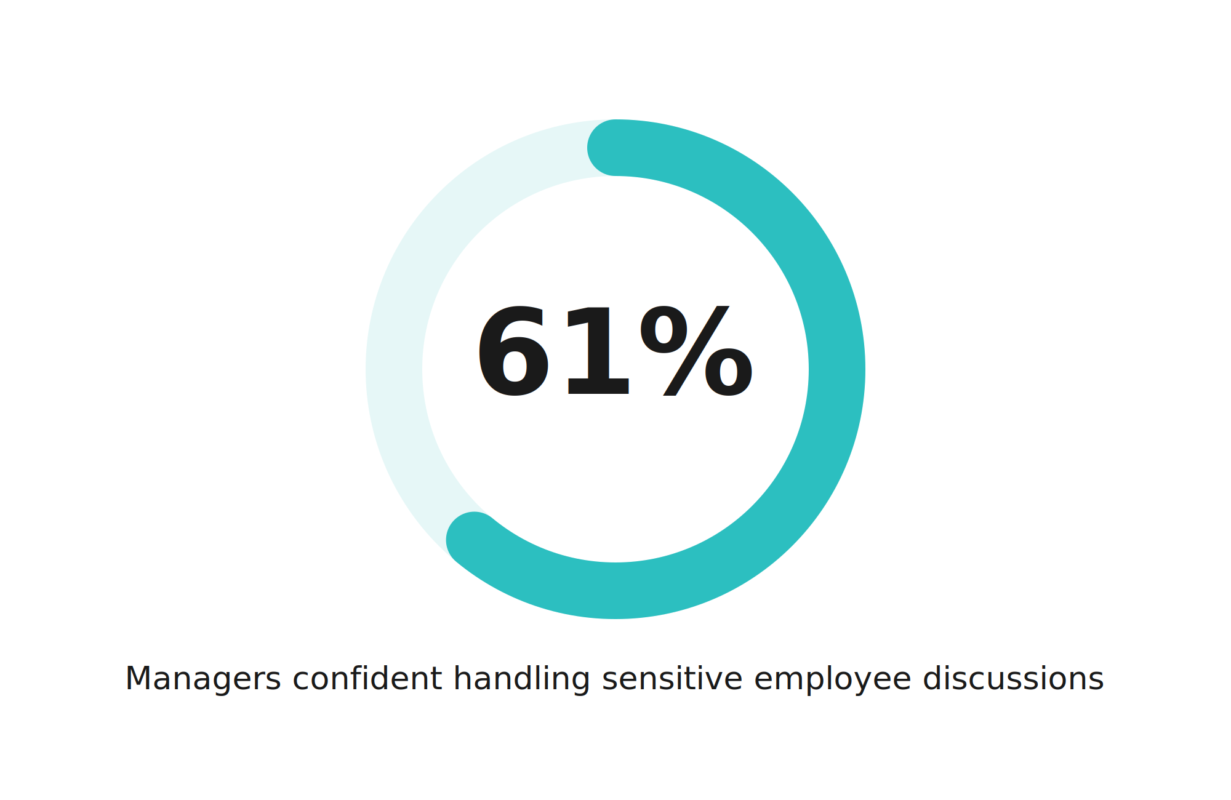
- 61% of respondents said managers were confident in having sensitive discussions and directing employees to expert support.
- 51% said managers were confident in spotting early warning signs of mental ill health.
- Improving a manager’s people management skills from the 10th to the 90th percentile can reduce employee turnover by 60%.
- 72% of leaders surveyed by Deloitte believed executive bonuses should be linked to workforce wellbeing metrics.
- 83% of leaders said publicly reporting wellbeing metrics could build trust with employees.
- Only 39% of organizations fully quantify the financial impact of poor employee wellbeing.
Financial Wellbeing
Financial pressure can affect both employee wellbeing and workplace decisions. Employers are responding with financial wellness programs, higher contributions, retirement support, and income protection, while workers continue to value benefits that improve their financial security.
- Financial well-being concern fell from 6.9 out of 10 in 2022 to 6.3 in 2025.
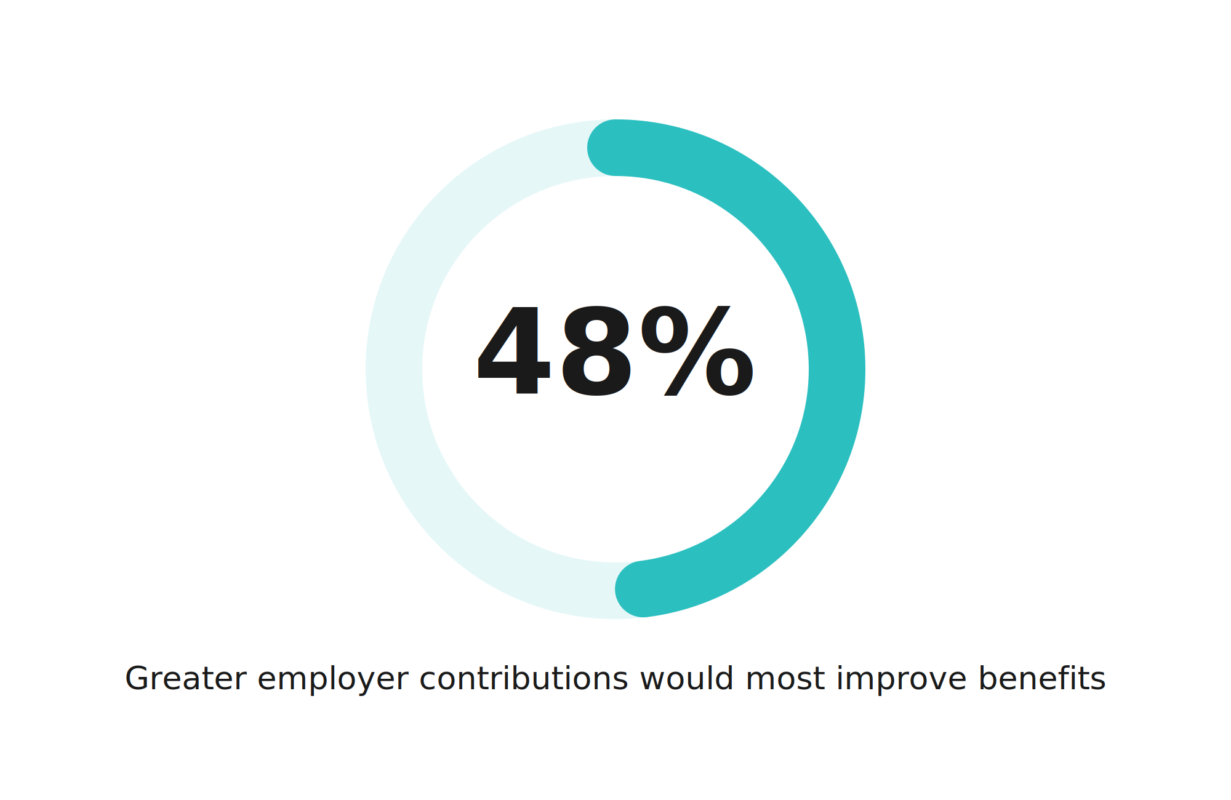
- 48% of workers said greater employer contributions would be the most valuable improvement to their benefits.
- 56% of workers said higher wages are one of the top ways employers can improve financial security and wellbeing.
- 37% pointed to greater employer contributions to retirement plans as a way to improve financial wellbeing.
- 81% of respondents agreed that providing a financial safety net for employees during ill health is the right thing to do.
- 61% said group income protection insurance would be a valuable benefit.
Employer Wellness Performance
Employees do not always rate employer wellness efforts highly, particularly in areas such as financial wellbeing. The findings suggest that providing benefits alone may not be enough. Organizations also need to ensure their support meets employee expectations and delivers practical value.
- In 2025, 44% of workers rated their employer excellent or very good at improving workplace wellbeing.
- 44% gave the same rating to their employer’s efforts to improve physical wellbeing.
- 43% rated their employer excellent or very good at improving emotional wellbeing.
- Only 36% gave the same rating for financial wellbeing.
- 66% of workers said their employer’s efforts to help employees manage overall wellbeing had stayed the same.
Global Workplace Wellness Market
The workplace wellness industry is a large, growing market, driven by corporate spending on employee health and wellbeing. However, recent growth has been modest, showing that increased attention toward wellness does not always translate into rapid market expansion.
- The global workplace wellness market reached $53.3 billion in 2024, up from $51.5 billion in 2019.
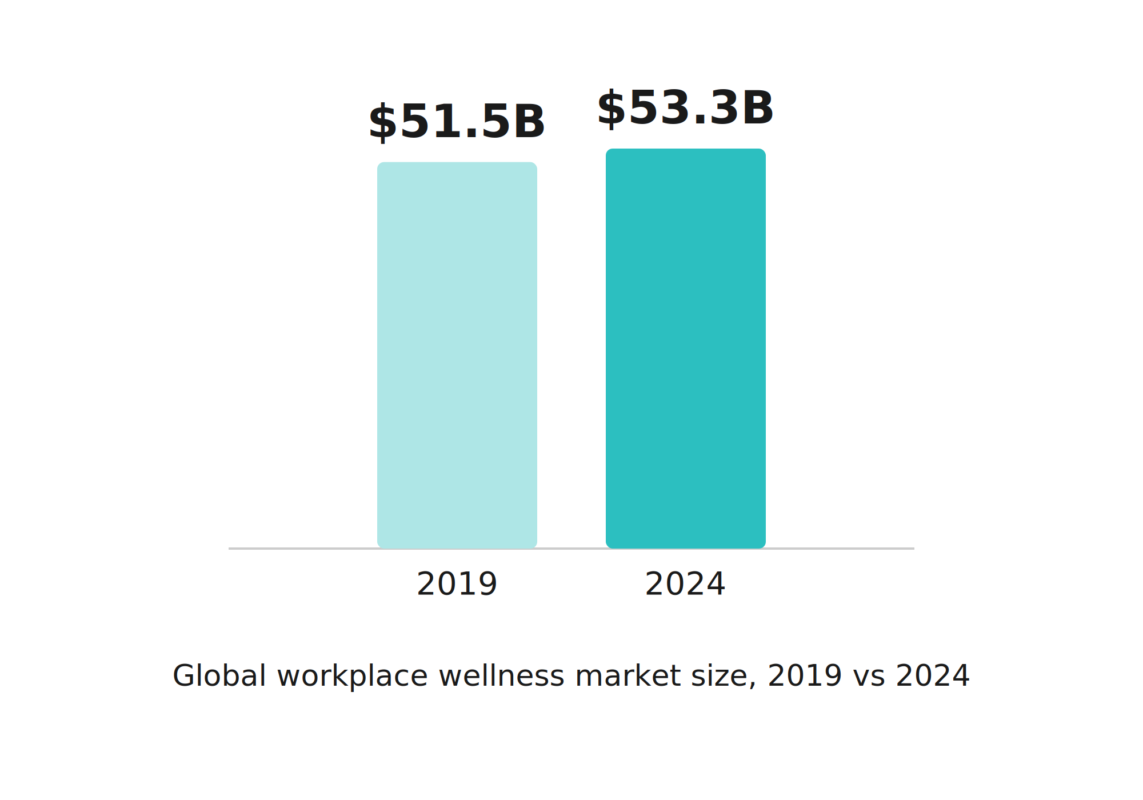
- The market is projected to reach $59.3 billion by 2029, growing at a 2.2% average annual rate.
- Workplace wellness spending grew by only 0.7% per year from 2019 to 2024, while the market declined 1.5% between 2023 and 2024.
- Global corporate spending on workplace wellness programs is expected to reach $94.6 billion by 2026.
- The United States was the largest workplace wellness market in 2024, with estimated spending of $19 billion.
- The top 20 countries accounted for 84% of global workplace wellness spending in 2024.
Global Access to Workplace Wellness
Access to workplace wellness programs differs sharply by region. North America and Europe have much higher coverage than Asia Pacific and Sub-Saharan Africa, highlighting a significant global gap in employees’ access to organized workplace wellness support.
- Only 9.8% of employed workers worldwide, or about 349 million people, had access to workplace wellness programs in 2024. This was down from 10.1% in 2023.
- North America had the highest workplace wellness coverage in 2024 at 46.08%, followed by Europe at 28.49%.
- Workplace wellness coverage was 9.55% in the Middle East and North Africa, 4.95% in Asia Pacific, and 1.67% in Sub-Saharan Africa.
- North America generated $21 billion in workplace wellness spending in 2024, while Europe generated $19.9 billion. Together, they accounted for more than three-quarters of global spending.
💡 Read our other research articles:
- 16 Diwali Shopping and Gifting Statistics of India
- 50+ Employee Satisfaction Statistics To Track
- 40+ Employee Retention Statistics Every HR Should Know
Final words
Workplace wellness is becoming an important part of how companies support, engage, and retain their employees. Thoughtful wellness initiatives can show employees that their health and everyday needs matter.
For companies looking to support employee wellness through thoughtful gifts, TapWell offers a wide range of wellness-focused corporate gifts, including yoga mats, massage devices, fitness products, hydration items, and personal care gifts. With 4,000+ products and customization options, TapWell helps businesses choose practical gifts that employees can genuinely use and appreciate.
👉 Contact TapWell to create a wellness gifting plan for your team.
Data Sources
- https://www.ebri.org/docs/default-source/wbs/wws-2024/wws-2024_short-report.pdf
- https://www.hbs.edu/ris/Publication%20Files/PDF%20Why%20Workplace%20Well-Being%20Programs%20Dont%20Achieve%20Better%20Outcomes_c63fb5c8-5cc4-4428-bdeb-a3d7dafc4c0b.pdf
- https://www.cipd.org/globalassets/media/knowledge/knowledge-hub/reports/2025-pdfs/8920-Health-and-wellbeing-report-2025-/
- https://globalwellnessinstitute.org/wp-content/uploads/2025/11/2025-GWI-WE-Monitor_DIGITAL-FINAL.pdf
- https://www.ebri.org/docs/default-source/wbs/wws-2025/wws-2025-short-report.pdf?sfvrsn=5099052f_1